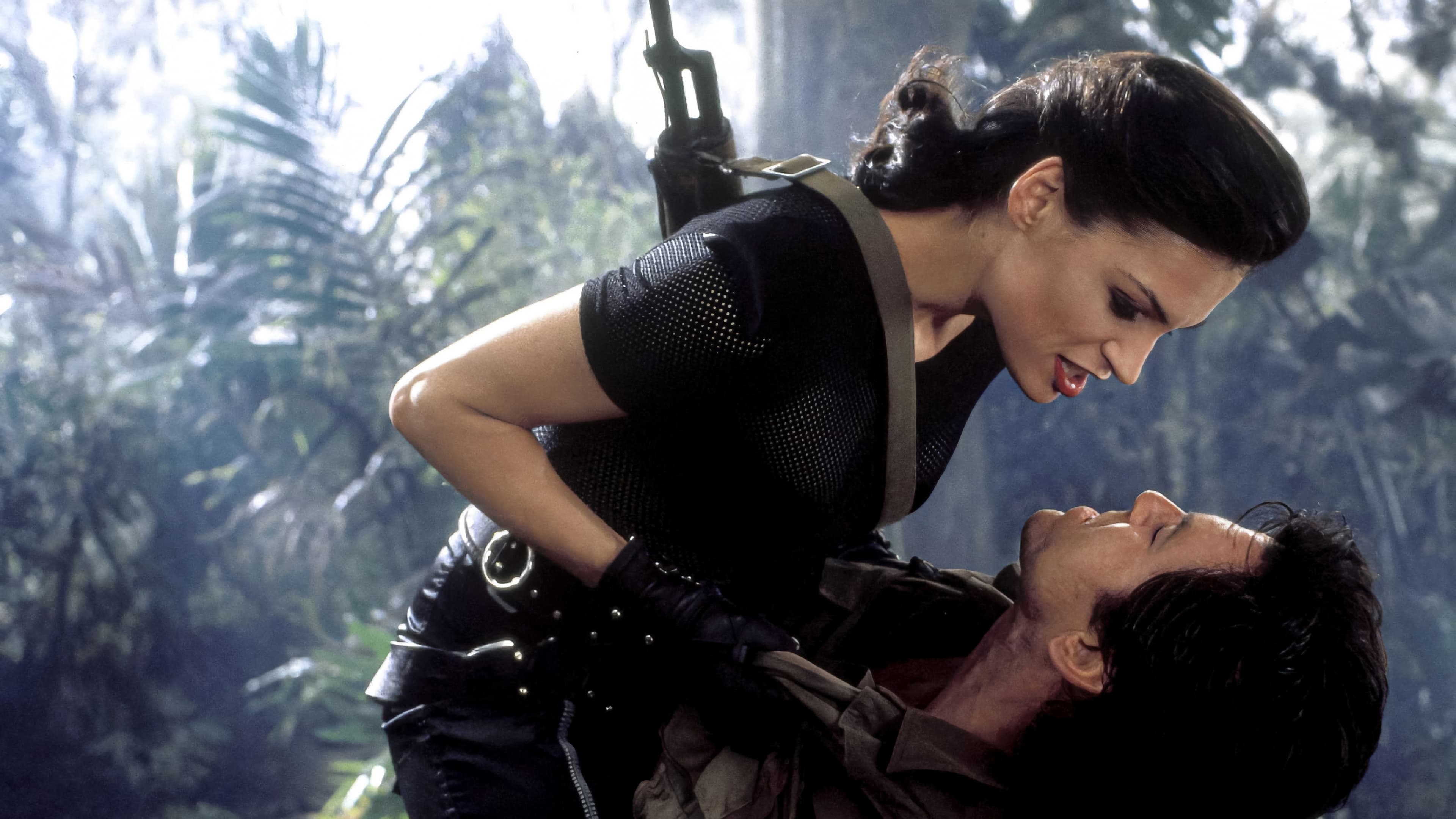
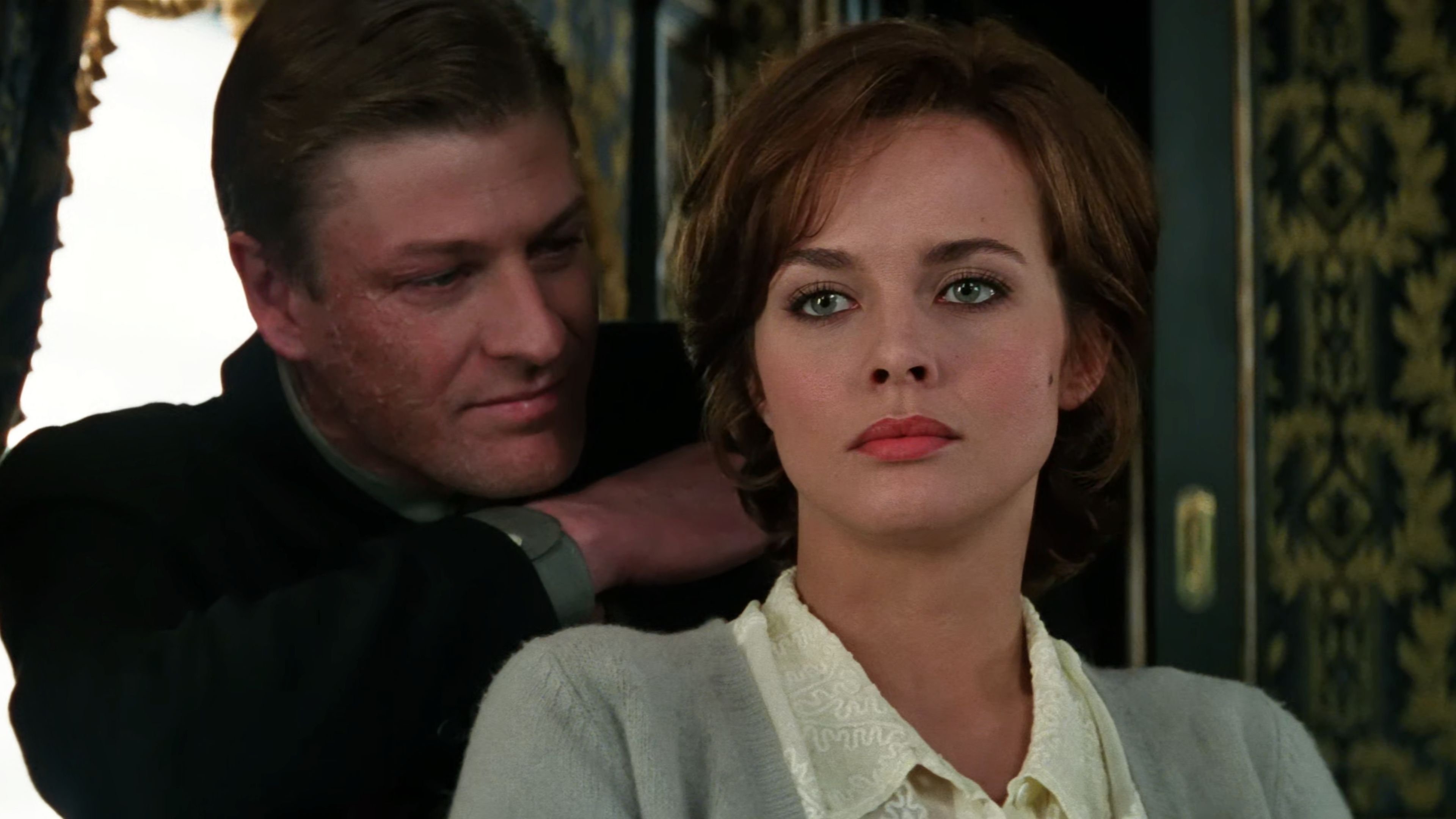
Bond beats Trevelyan by jamming the GoldenEye satellite dish and dropping him from the antenna platform as the Cuban base is destroyed. The ending works because three separate plans collapse in a row: Trevelyan's robbery, his satellite weapon and his hold over Natalya Simonova.
The sequence runs in four steps. First, Natalya, forced to work for Trevelyan, secretly sets the satellite to fall out of orbit, which removes the threat to Britain before Bond has landed a punch. Second, a grenade pen used by her colleague Boris Grishenko sets off an explosion that lets Bond break free from capture. Third, Bond jams the satellite dish. Fourth, he fights Trevelyan on the antenna platform and drops him into the dish below as the base collapses.
The satellite matters because Trevelyan planned to rob the Bank of England and then use GoldenEye to erase the records. Losing the weapon ends the heist and the attack on the British economy together. The closing beats are quieter: Boris dies in the nitrogen leak, Natalya flies Bond clear of the explosion, and Jack Wade and US Marines then escort Bond and Natalya to Guantanamo Bay.
The finale answers the 1986 prologue. Trevelyan seemed to die at Ourumov's hands in the Soviet chemical weapons plant, and he ends the film dropped to his death by the partner he once fought beside. That symmetry is a structural choice, and in my opinion it gives the film a personal stake that is the yardstick to judge it by next to Licence to Kill, the 16th film, and Tomorrow Never Dies, the 18th, which sit on either side of it in release order.
On the commercial side, Box Office Mojo records about $352 million worldwide, and The Numbers lists a $60 million budget, so the series' 17th entry returned nearly six times its cost. In my opinion, small objects deciding a huge outcome is the most satisfying detail: a pen, a dish and a few keystrokes by Natalya do as much as Bond does. The film closes with Bond and Natalya together after the mission.