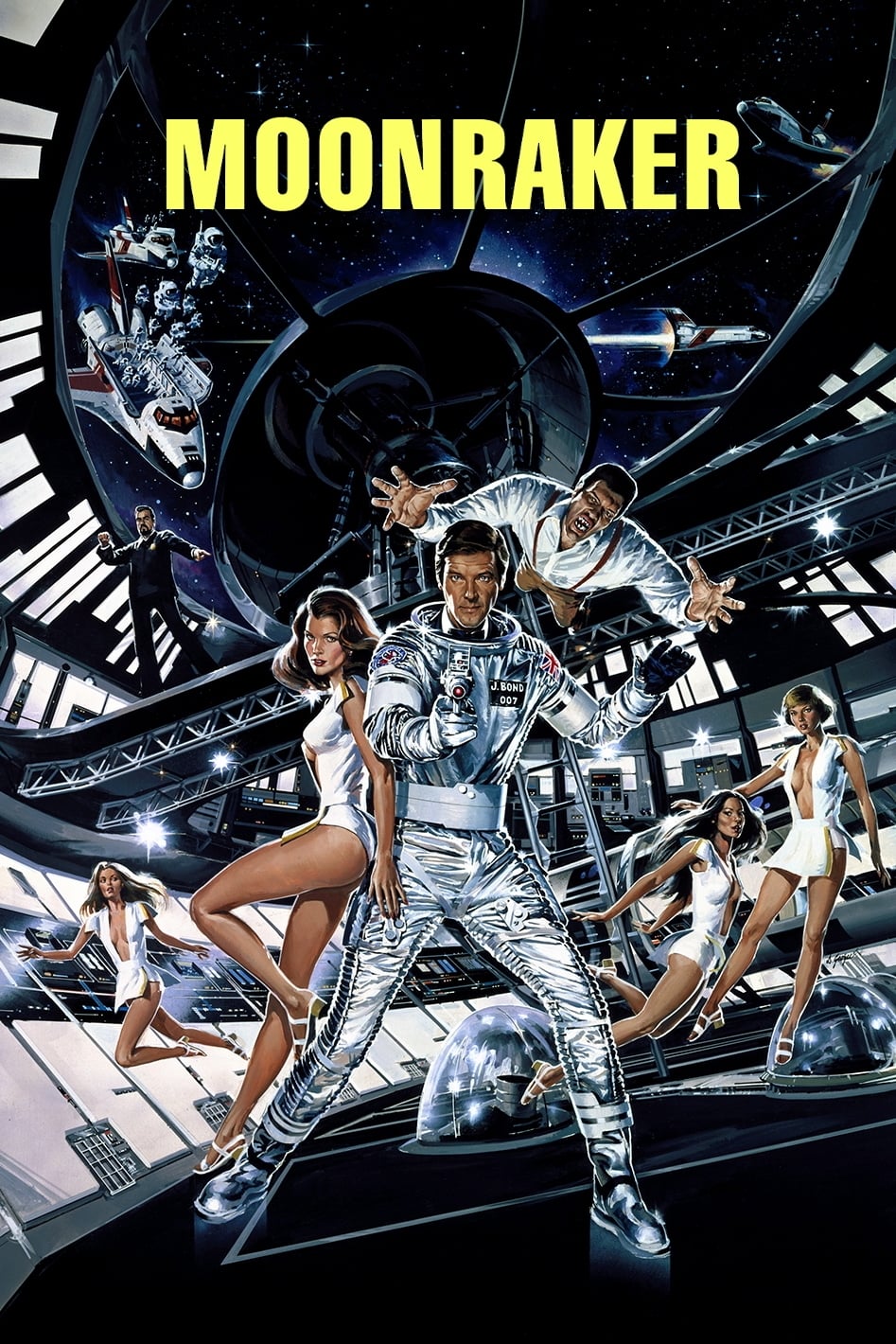
In the ending of Moonraker, James Bond and Dr. Holly Goodhead destroy Hugo Drax's poison globes, Drax is ejected into space, and Jaws and his companion Dolly survive and are rescued by US Marines.
First, the globes. Drax needs fifty of them launched to carry out his plan, which is why the laser battle on the space station matters: Bond and Goodhead only have to destroy the globes before they hit the Earth, and they do. The design of the plan links back to the Venice laboratory. The nerve gas Bond finds there kills people but leaves plants and animals unharmed, and the toxin comes from a rare orchid, so the weapon was built to clear humanity and leave the natural world intact for the young people Drax has chosen to repopulate it.
Second, Drax is ejected from the station into space. It is the very station he built as a refuge for his hand picked group of young people, so the place meant to outlast humanity is where his plan ends. The route to that finish is also a tour of the film's locations: Drax's California estate was Château de Vaux-le-Vicomte in France, the Amazon pyramid exterior was shot at Tikal in Guatemala, and the space battle exteriors were built at Pinewood Studios in the UK, per the filming location list in the Wikipedia entry for the film.
Third, Jaws (Richard Kiel), who switched sides after Bond persuaded him, survives with Dolly (Blanche Ravalec) and is picked up by US Marines. So, did Jaws and his girlfriend survive Moonraker? Yes, both do. That last turn is the one that changes the series most. Jaws starts the film by throwing Bond out of a plane, faces him again in Rio de Janeiro as Drax's man, and ends it as an ally. In my opinion, it could be argued that this makes him the most developed character in the film, since he is the only one who changes sides.
The scale matches the money on screen. Moonraker was made on a $31 million budget and grossed about 6.8 times that worldwide, according to The Numbers and Box Office Mojo, and a story that ends in orbit is the logical close for a production that also shot at Kennedy Space Center.
The film closes with Bond and Goodhead together, as a standalone adventure with no direct hook into the next film, For Your Eyes Only. That is a contrast with the idea of a series that carries plot threads forward: Moonraker, the eleventh EON film, follows The Spy Who Loved Me and hands nothing on to its successor.