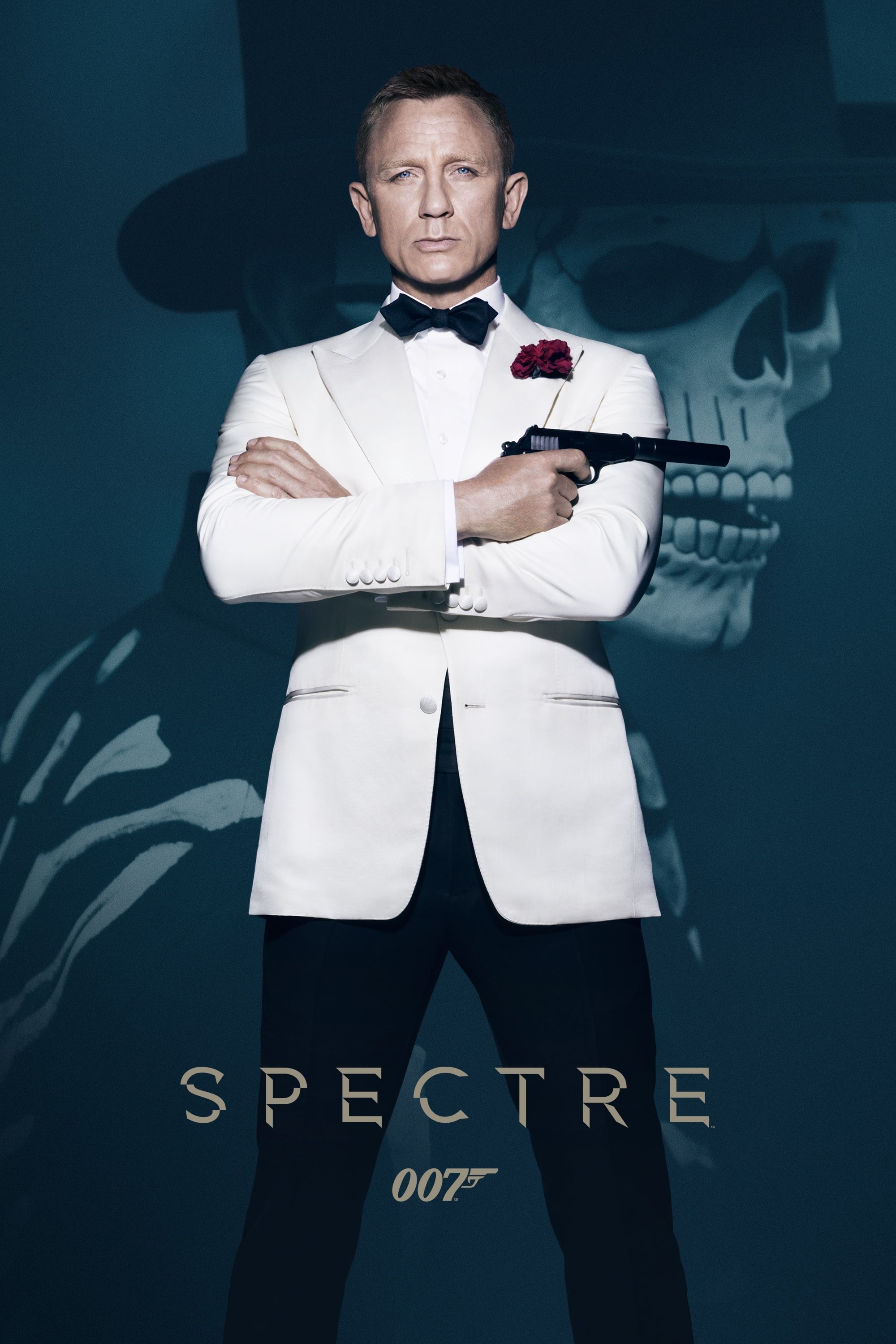
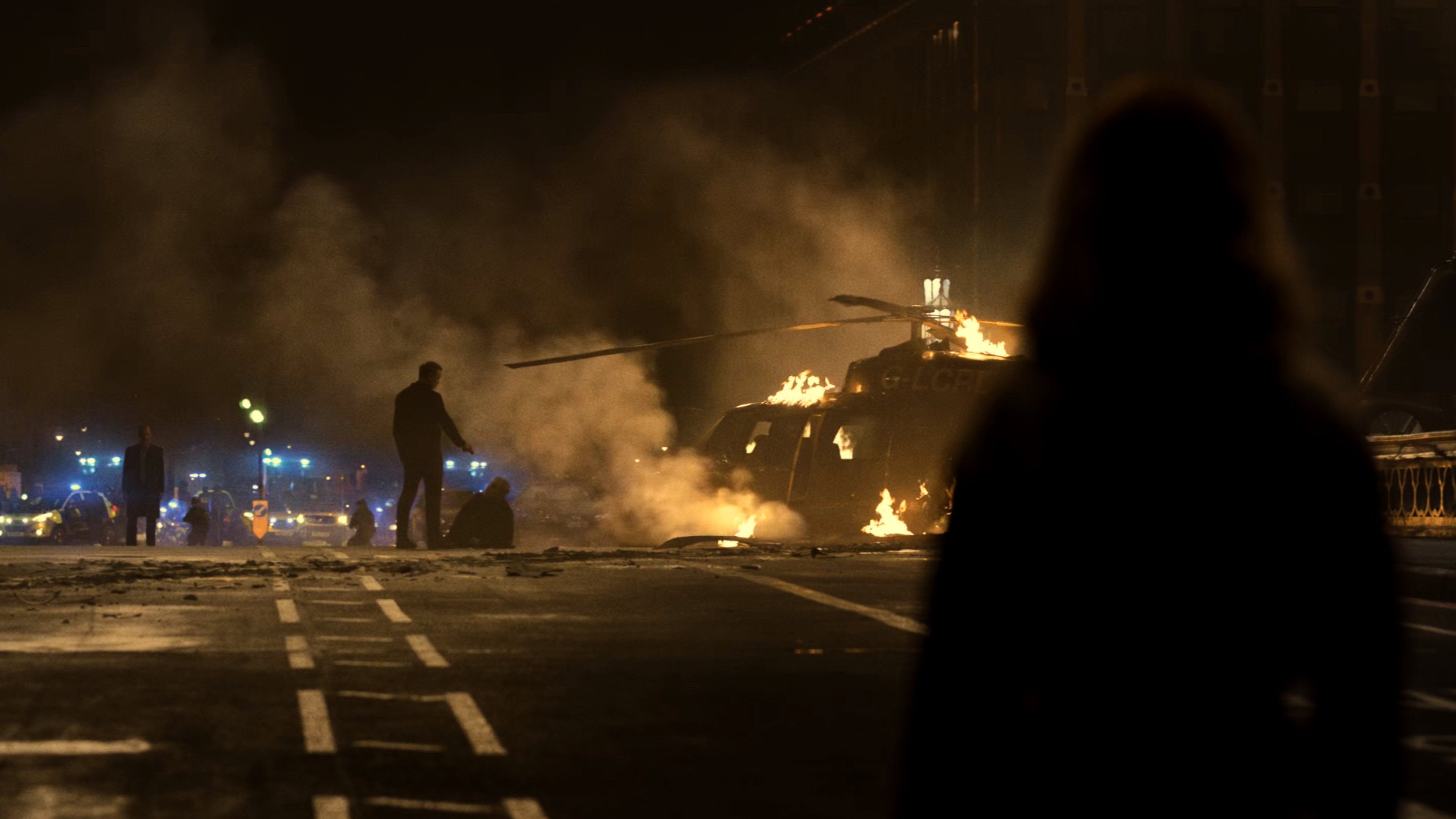
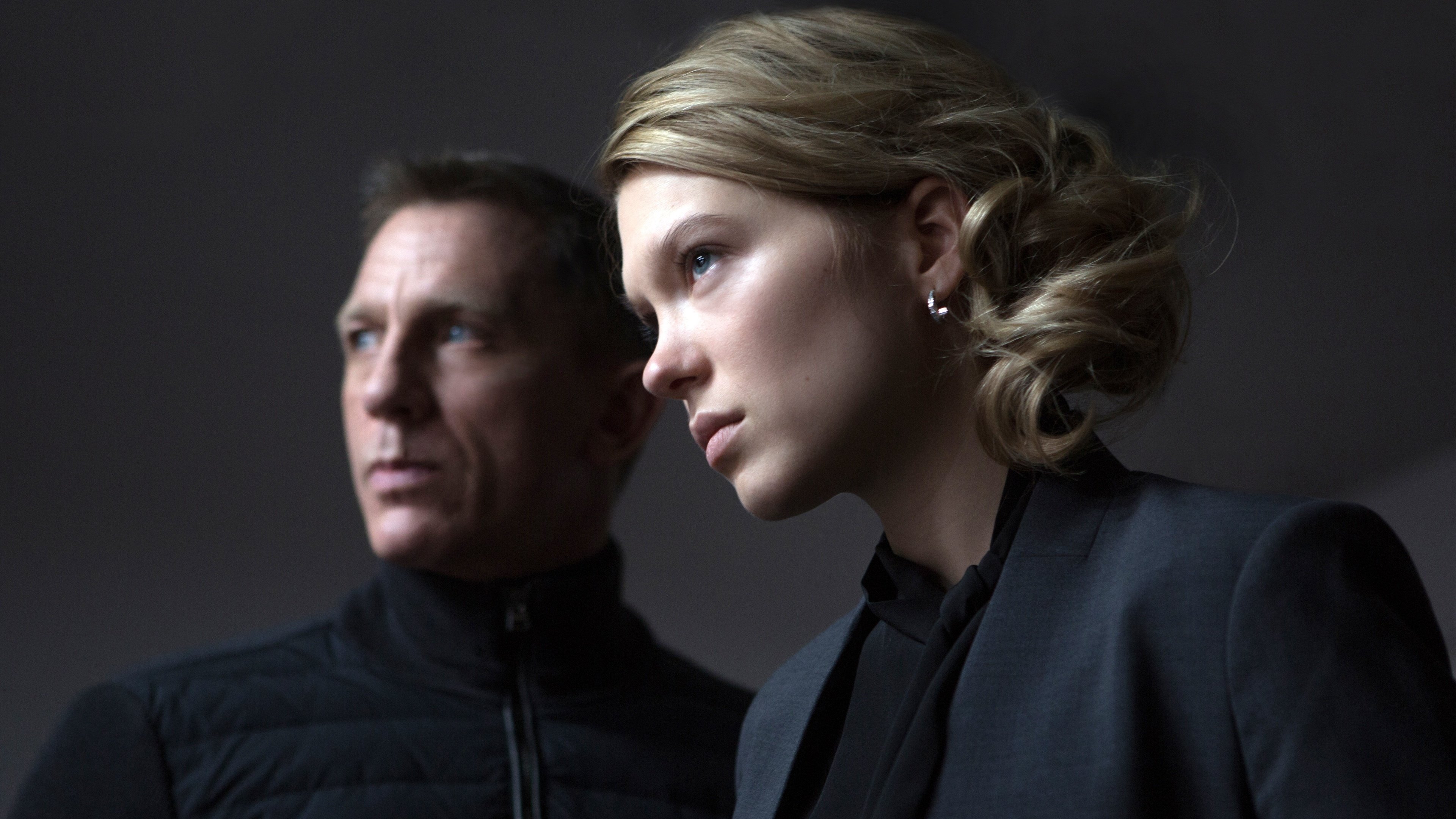
At the end of Spectre, M arrests Ernst Stavro Blofeld after his helicopter crashes, and Bond drives away from MI6 with Madeleine Swann in the restored Aston Martin DB5. Nine Eyes is stopped before it can go live, C is dead, and the plan to merge the services falls apart.
The sequence runs in a clear order. Q shuts Nine Eyes down from inside MI6, and C dies in a struggle with M, so the surveillance scheme is dismantled before Bond reaches the finale. Blofeld then lures Bond to the ruined old MI6 building. Bond rescues Madeleine as it collapses, then brings down Blofeld's helicopter over the Thames, the stretch near Westminster Bridge where the production shot its boat and helicopter scenes. Blofeld survives the crash, and M makes the arrest. Bond, who spent most of the film suspended and acting without orders, ends it by handing the villain to the service rather than killing him.
The closing choice is set up much earlier. In Austria, the dying Mr. White, a former Quantum member, asks Bond to protect his daughter, Madeleine Swann, and then takes his own life. Madeleine later tells Bond that Spectre stood behind his earlier enemies, which is how the film recasts the Quantum material from the preceding Daniel Craig films as one organization's work. When Bond walks away with her at the end, he honors that request and leaves a spy life that began, for this story, with a dead M's final message.
Was Spectre meant to be the last Bond film? No. No Time to Die followed as the 25th EON film. In my opinion, the ending reads as a farewell to Bond's old life rather than a promise of a final film: Blofeld in custody, not dead, leaves Spectre's leader alive and the organization a loose thread.
A comparison inside the series shows the choice. Among the 24 EON films before this one, Spectre is built around a villain who is captured instead of destroyed, and the film itself says that Spectre's leader is in custody rather than gone for good. The scale of the work behind the finale is documented: principal photography ran from December 2014 to July 2015 over 128 days, with the London river scenes among the last major locations in the schedule of English work alongside Pinewood Studios.