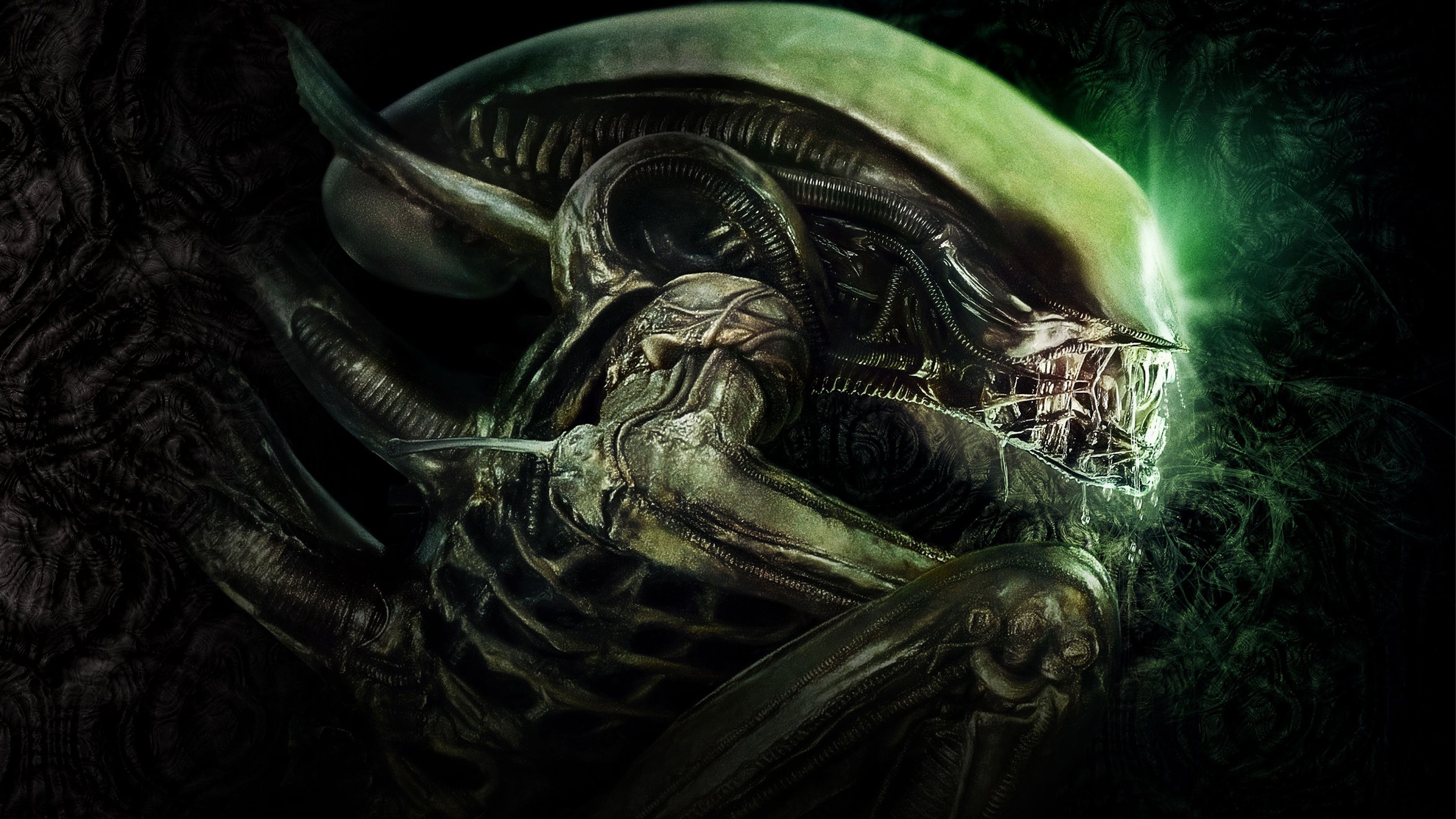
Xenomorph Life Cycle: Every Stage From Egg to Queen
The xenomorph life cycle has five stages: the egg (ovomorph), the facehugger, the chestburster, the adult Xenomorph and the Alien Queen, who lays new eggs. Across the films, from Alien (1979), directed by Ridley Scott, to Alien: Romulus (2024), directed by Fede Álvarez, each stage is shown with small changes, and a few hybrid routes break the pattern.
Xenomorph life cycle
Xenomorph Life Cycle: The Five Stages at a Glance
The xenomorph life cycle is the sequence by which the creature reproduces through a living host: an egg opens, a facehugger implants an embryo, a chestburster emerges, and an adult Xenomorph grows from it. A Queen sits above the adults in a hive and lays the eggs that restart the chain. That is the pattern set up in Alien (1979), directed by Ridley Scott, and the sequels keep returning to it with small changes.
The cleanest way to see the stages is to follow the main films in order: Aliens (1986), directed by James Cameron, Alien 3 (1992), directed by David Fincher, Alien Resurrection (1997), directed by Jean-Pierre Jeunet, and Alien: Romulus (2024), directed by Fede Álvarez. The prequels Prometheus (2012) and Alien: Covenant (2017), both directed by Ridley Scott, show related creatures that arrive by different routes. AVP: Alien vs. Predator (2004) and Aliens vs Predator: Requiem (2007) add a Predator twist to the cycle, although their own pages live in the Predator franchise. For the wider chronology, see the Alien timeline, and for the films in sequence, see Alien movies in order.
Stage One: The Egg (Ovomorph)Spoilers
The egg, known to fans as the ovomorph, is the stage where the cycle waits for a victim. In Alien (1979), Dallas, Kane and Lambert leave the Nostromo for a small moon, find a derelict alien vessel and enter a chamber holding a large field of eggs. Kane looks into one of them, and that single look sets the whole film in motion.
Aliens returns to the idea on LV-426, where the colony has gone silent and the Marines walk into the alien nest. Burke's plan to carry alien embryos home for profit shows how Weyland-Yutani treats the early stages as an asset rather than a danger. In AVP: Alien vs. Predator, a captive Queen is freed beneath the ice of Bouvet Island and begins laying eggs, in a pyramid where the Predators breed Xenomorphs as prey for a rite of passage.
Stage Two: The Facehugger and How Xenomorphs Impregnate HumansSpoilers
A facehugger is a creature that leaps from an opened egg onto a victim's face and implants an embryo, which is how Xenomorphs impregnate humans in the films. In Alien (1979), the creature jumps onto Kane's face after he looks into the egg. Ripley has worked out that the transmission was a warning and tries to stop the group from boarding, but the science officer Ash lets them in anyway.
The facehugger later falls off and dies, and Kane seems to recover, so the crew is caught off guard when the chestburster arrives at the meal. Alien 3 shows the stage on an unexpected host, because a facehugger had attached itself to an animal in the prison, and Bishop confirms that one was aboard the escape pod. In Alien: Romulus, a security lockdown on the Renaissance station frees facehuggers, and one of them impregnates Navarro. AVP: Alien vs. Predator has facehuggers infect members of the expedition, and in Aliens vs Predator: Requiem a Predator ship carrying captured facehuggers crashes near Gunnison, Colorado.
Stage Three: The ChestbursterSpoilers
The chestburster is the young Xenomorph that tears out of its host, and it is the moment the series is best known for. In Alien (1979), it bursts out of Kane's chest during a meal and escapes into the Nostromo, where it grows quickly and kills Brett first. The same stage appears in Alien 3 when an alien bursts out of an animal, and in Alien: Romulus when the chestburster kills Navarro and leaves the group with no way home.
The stage does not always look the same. In AVP: Alien vs. Predator, the archaeologist Sebastian becomes a Xenomorph host and Lex puts him out of his suffering. The film's ending then shows a Predalien bursting from the chest of the dead Predator Scar. Prometheus ends on a similar image, with a new creature bursting from the dead Engineer's chest, which points to the monster of the original film.
Stage Four: The Adult Xenomorph and the Xenomorph LifespanSpoilers
The adult Xenomorph is the fully grown hunter, and no film states how long it lives. In Alien (1979), the creature, credited as Alien and played by Bolaji Badejo, takes Brett, then Dallas as he hunts it in the air ducts, and later Parker and Lambert. Ripley finally blasts it out of the shuttle through an airlock. Alien 3 and Alien: Romulus both show the young creature growing quickly after it hatches.
The films do agree on other traits, chiefly the acidic blood. In Alien Resurrection, Ripley's acidic blood eats a hole through a window and the hybrid is sucked out into space. In Alien: Romulus, Bjorn is killed by acid blood, and Rain cuts the gravity so that she can fire on the swarm without acid damaging the hull. In Alien 3 the inmates lure the alien toward the foundry and the sudden cooling from the sprinklers finishes it. See the Xenomorph character page for the creature itself.
Stage Five: The Alien Queen and the Xenomorph Queen Life CycleSpoilers
The Alien Queen is the stage at the head of the hive, and she is the one who lays eggs. Aliens introduces her when Ripley goes back alone to find Newt and finds the girl in the hive. The Queen later stows away on the survivors' ship, and Ripley fights her in a power loader before forcing her out through an airlock. The Alien Queen page covers her as a character.
The Queen's own origin is where the films get inventive. In Alien 3, a scan shows that Ripley is carrying a Queen embryo, and she throws herself into the furnace to kill it. In Alien Resurrection, scientists clone Ripley and remove the Queen growing inside her, and the Queen is later able to give live birth to a pale, human looking hybrid that kills her. In AVP: Alien vs. Predator, the freed Queen lays eggs until Lex and Scar drag her over a cliff with a chain tied to a water tank.
How Do Xenomorphs Reproduce Without a Queen?Spoilers
On screen, the chain from egg to adult can run without a Queen present, because Alien (1979), Alien 3 and Alien: Romulus each get an adult from a facehugger and a host. In Alien (1979), the crew finds a chamber full of eggs, yet the film never shows who laid them. The creature that stalks the Nostromo comes from a single egg, a single host and a single chestburster.
The question of how Xenomorphs lay eggs without a Queen therefore has no direct answer in the films. In the films, the only egg laying shown is done by the Queen in AVP: Alien vs. Predator. The other routes skip her, using an animal in Alien 3 or Navarro in Alien: Romulus as the host. In my opinion, that is why the Queen reads as a late addition to the cycle: the four stages before her already work as a complete loop.
Hybrids and Variants: When the Xenomorph Life Cycle Changes ShapeSpoilers
Several films bend the standard sequence, and each one swaps a stage for something new. In Aliens vs Predator: Requiem, a Predalien, a hybrid of Alien and Predator, escapes the crash near Gunnison and starts implanting embryos in people, while a Predator called Wolf tries to clean up. In Alien Resurrection, the clone Ripley 8 carries alien DNA that gives her extra strength, acidic blood and a link to the creatures.
The prequels use different mechanisms again. In Prometheus, David slips a drop of black liquid into Holloway's drink, Shaw cuts a creature shaped like a squid out of herself, and it grows huge and subdues the Engineer. In Alien: Covenant, spores infect crew members and grow into violent neomorphs, and David later infects Oram with an alien embryo and plans to use embryos on the sleeping colonists. Alien: Romulus ends with a human and xenomorph hybrid born to Kay.
Xenomorph Life Cycle in Alien: RomulusSpoilers
In Alien: Romulus, the life cycle runs from facehugger to chestburster to adult, and then adds a hybrid at the end. The film opens with a probe recovering a strange cocoon from the wreck of the Nostromo. Months later, Rain and her friends fly a salvage ship to the derelict Renaissance station to steal cryosleep pods. The station's scientists studied the creature and made a fluid called Z-01 from the facehuggers, which can rewrite human DNA.
The lockdown frees the facehuggers and one impregnates Navarro, whose chestburster kills her. The creature that hatches grows quickly and hunts the group, and the plot does not turn on a Queen. Kay later injects herself with Z-01 and gives birth to a human and xenomorph hybrid, which kills her and disables Andy. Rain throws it out into the planet's rings, where it breaks apart. A follow up to the film has no announced release date. TheWrap reported on October 23, 2026 that 20th Century Studios has a separate new Alien film in early development, with Ridley Scott producing, Aaron Guzikowski writing and no director attached. It is reportedly tied to Prometheus and Alien: Covenant. Status updates sit on the Alien Romulus 2 page.
Xenomorph Life Cycle Explained: What the Films Agree OnSpoilers
The films agree on a core of rules, and they vary everything around it. A host is always required, the young creature grows fast, and the moment of greatest danger arrives when the victim seems to have recovered. In my opinion, that last rule is what holds the series together, because Kane's apparent recovery before the meal in Alien (1979) is the scene every later chestburster answers to.
Chronology helps here. Chronologically, Prometheus and Alien: Covenant come first, then Alien (1979), Alien: Romulus, Aliens, Alien 3 and Alien Resurrection. Alien: Romulus therefore sits between Alien (1979) and Aliens, and its facehugger stage fits comfortably into the world of the Nostromo. It could be argued that Alien 3 does the most with the least, since it moves the cycle from an animal to Ripley herself without adding a new creature.
The hybrids are the weakest part of the pattern, in my opinion. The Resurrection hybrid, the Predalien and the Romulus hybrid all suggest that the cycle borrows from its host, and none of them settles a rule that later films must follow. If you want to see the stages in the clearest order, watch Alien (1979), then Aliens, then Alien: Romulus, and compare the chestburster scenes as you go.
Facts
- Alien (1979) was released in the United States on May 25, 1979. 20th Century Studios, checked 2026-11-03
- Alien (1979) credits Bolaji Badejo as the Alien. TMDB, checked 2026-11-03
- Aliens was released in the United States on July 18, 1986. The Numbers, checked 2026-11-03
- Alien³ was released in the United States on May 22, 1992. Box Office Mojo, checked 2026-11-03
- Alien Resurrection was released in the United States on November 26, 1997. Box Office Mojo, checked 2026-11-03
- Prometheus was released in the United States on June 8, 2012. Box Office Mojo, checked 2026-11-03
- Alien: Covenant was released in the United States on May 19, 2017. Screen Daily, checked 2026-11-03
- Alien: Romulus was released in the United States on August 16, 2024. Box Office Mojo, checked 2026-11-03
- Alien: Romulus has a running time of 119 minutes. TMDB, checked 2026-11-03
FAQs
What is the Xenomorph lifespan?
No film states a lifespan for a Xenomorph. What the films show is speed: the creature from Alien (1979) grows quickly after bursting from Kane's chest, and Alien 3 and Alien: Romulus show the same fast growth. Any specific number of years is not given by the series.
Are all Xenomorphs technically female?
No Alien film establishes that every Xenomorph is female, so the claim is unconfirmed. The films show a Queen laying eggs, but they never state a sex for the adult hunters or the chestbursters.
How do Xenomorphs impregnate humans?
A facehugger leaps from an egg onto a victim's face and implants an embryo. In Alien (1979), the creature attaches to Kane, later falls off and dies, and Kane seems to recover before a chestburster emerges. The same route is shown in Alien 3, Alien: Romulus and AVP: Alien vs. Predator.
How do Xenomorphs reproduce without queens?
On screen, they do it through hosts. In Alien (1979), Alien 3 and Alien: Romulus, an adult appears after a facehugger and a host, with no Queen in the story. In the films, the only egg laying shown is the Queen's in AVP: Alien vs. Predator.
How do Xenomorphs lay eggs without a queen?
The films do not show it. Alien (1979) finds a chamber full of eggs on a derelict vessel without showing who laid them, and the Queen is the only creature shown laying eggs in the films.
What are the big 5 in Alien?
None of the films uses that phrase. If you mean the five stages of the xenomorph life cycle, they are the egg (ovomorph), the facehugger, the chestburster, the adult Xenomorph and the Alien Queen.