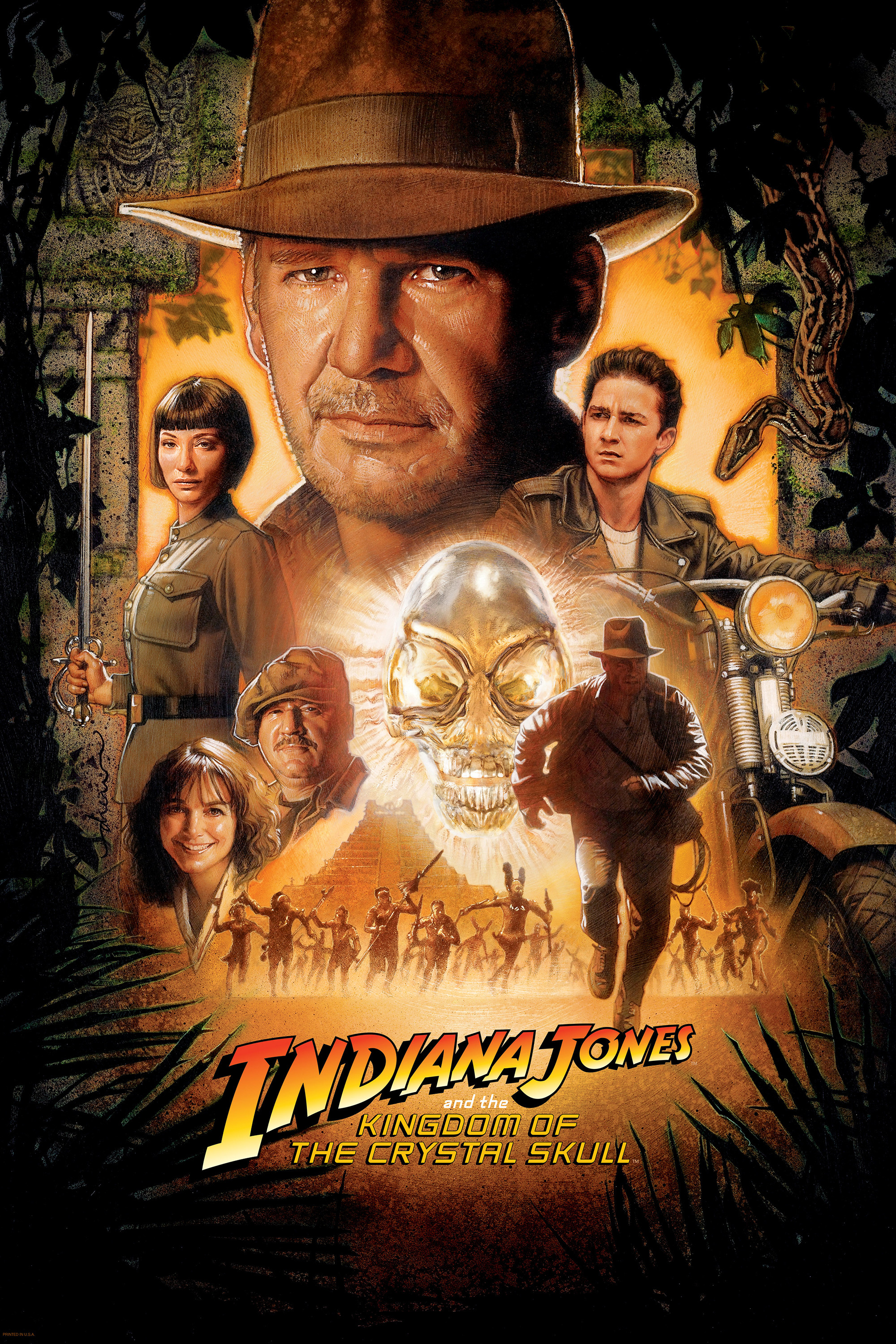
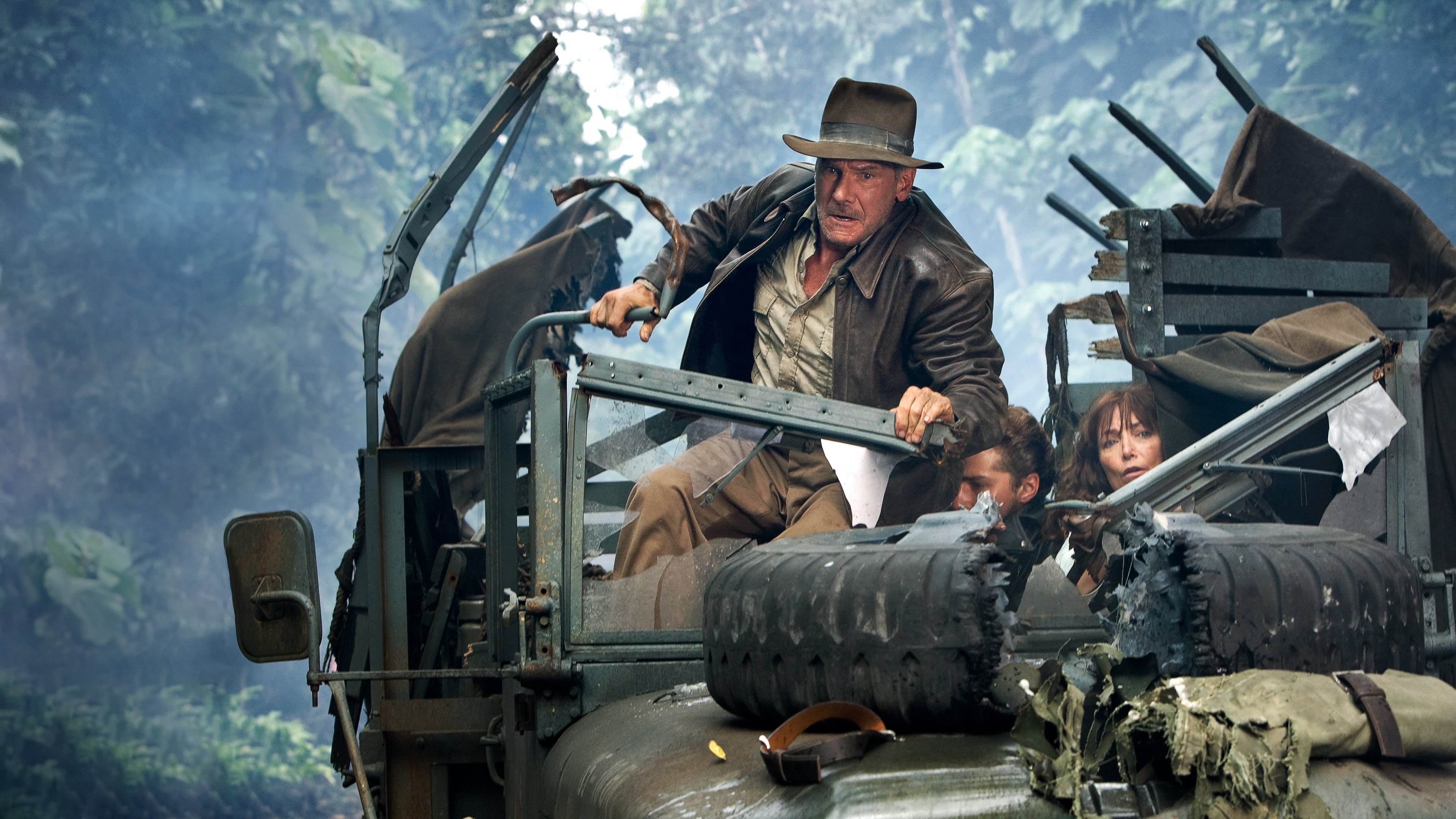
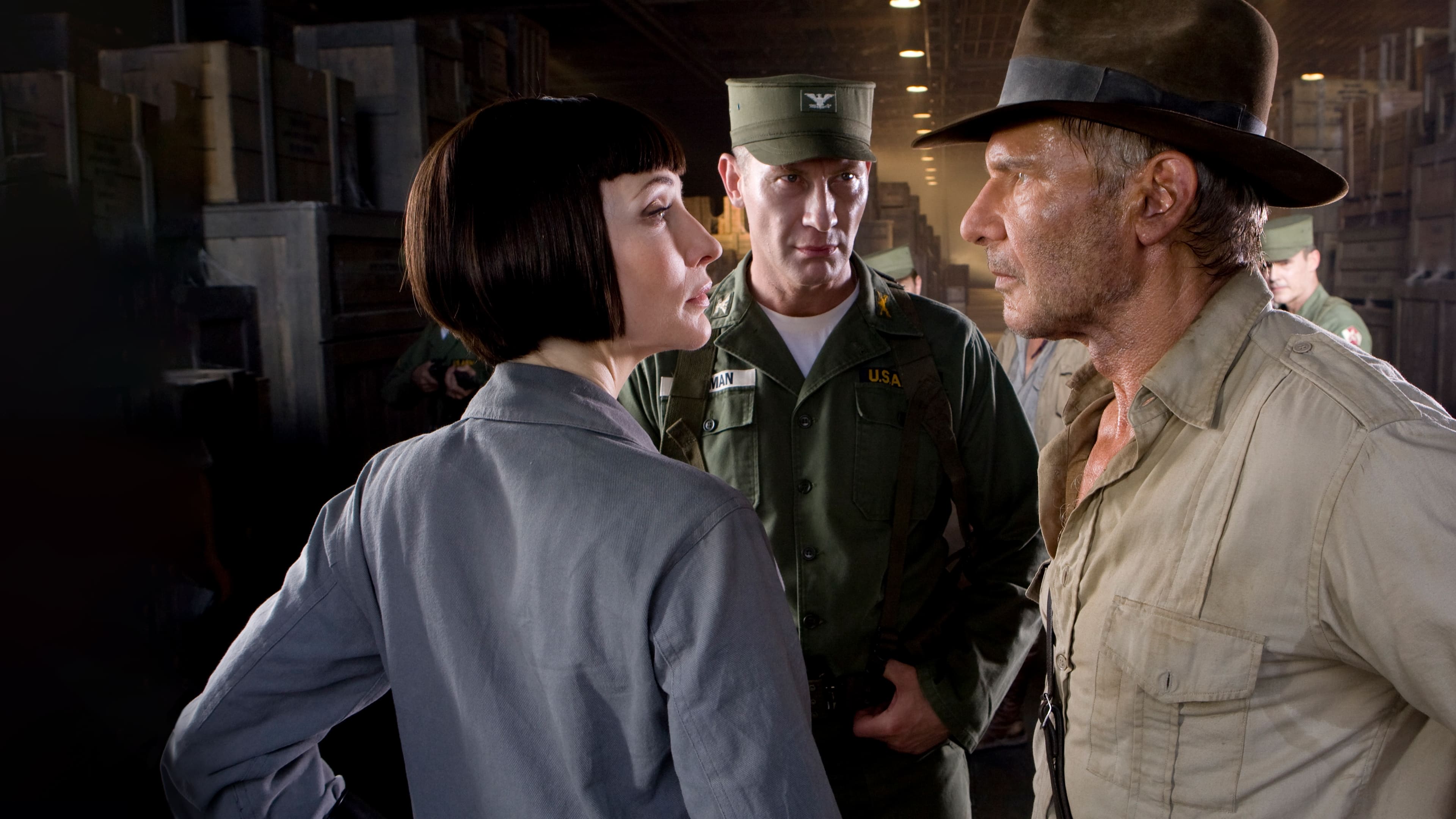
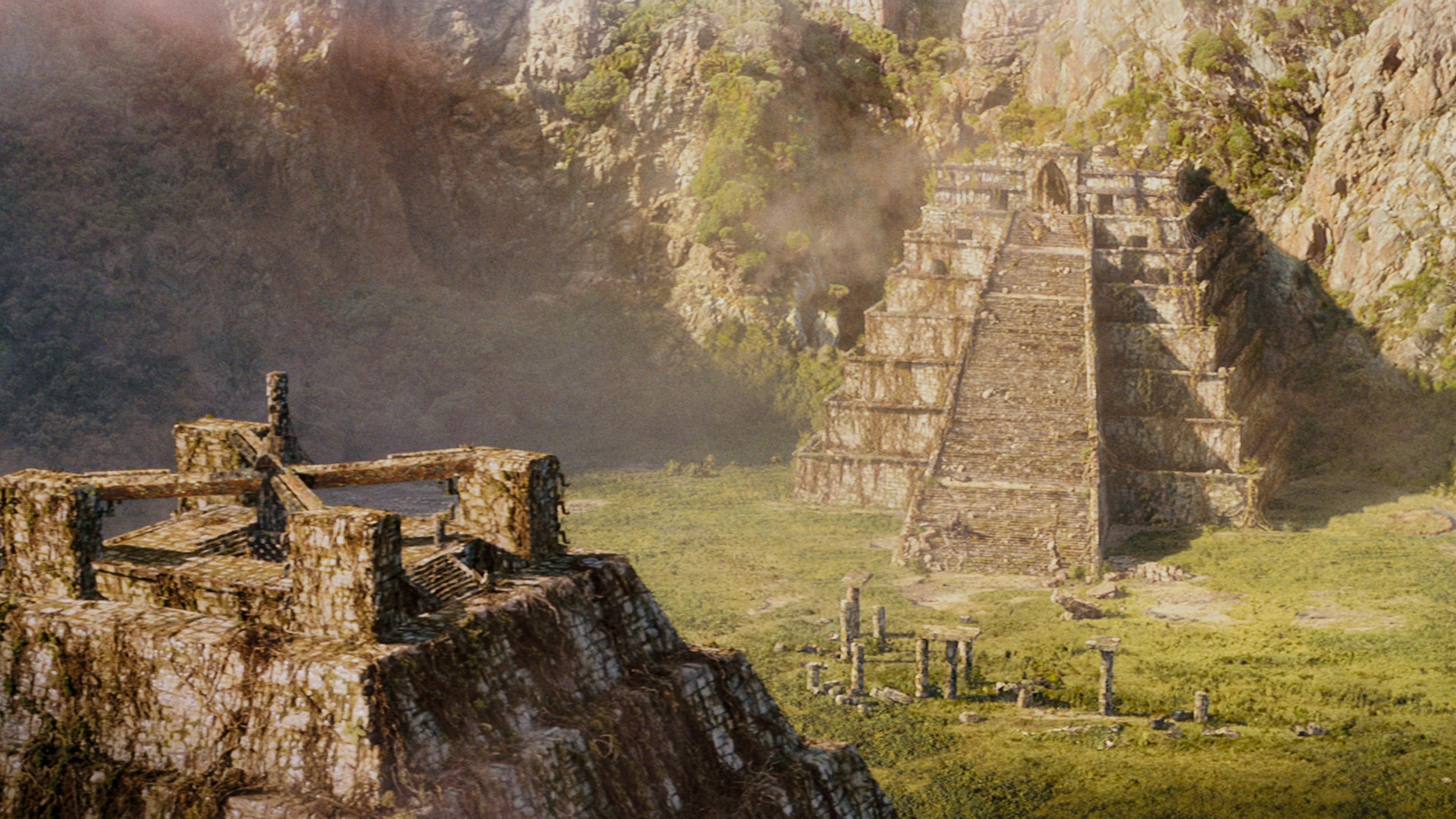
The ending of Kingdom of the Crystal Skull has Spalko destroyed by the knowledge she demands at Akator, Mac and the Soviet soldiers pulled through a portal, and Indy, Marion, Mutt and Oxley escaping as the city collapses and a flying saucer leaves for another dimension.
The closing scenes are more conventional. Back in the United States, Oxley recovers his sanity, and Indy is reinstated at Marshall College and promoted to associate dean. Indy and Marion marry, and the film closes on the wedding. It does not set up a direct sequel.
What does the finale mean? In my opinion, it is the clearest sign of what this film tried to be. Raiders of the Lost Ark opened in 1936 with a booby-trapped temple in Peru and a golden idol, and it worked like a 1930s serial built around a lost relic. Kingdom of the Crystal Skull opens in 1957 in the Nevada desert, with a mummified alien in a government warehouse and a refrigerator that shields Indy from an atomic test. The Akator climax follows from that opening: the 1950s swaps serial adventure for science fiction, and the artifact is a skull that belongs to one of thirteen interdimensional beings.
It could be argued that this is a fair update, since Indy has aged into a new decade and the Cold War replaces the Nazis. The Soviets under Spalko take the role the Nazis had in Raiders and in Indiana Jones and the Last Crusade. It could equally be argued that the beings are less personal than the Grail Knight, played by Robert Eddison in The Last Crusade, who tests Indy one on one. Spalko is destroyed by an idea rather than beaten by a hero, so Indy has no direct hand in her end.
The production context matters here. The film is credited as a screenplay by David Koepp from a story by George Lucas and Jeff Nathanson, and earlier drafts came from other writers, including Jeb Stuart, Jeffrey Boam and Frank Darabont. A script that passed through that many hands could plausibly end up with a finale that tries to satisfy several ideas at once. That is speculation on my part, not a reported fact.
Perhaps the fridge escape and the Akator finale divide viewers for the same reason: they are the two moments where the film asks for the most belief, and the first arrives in the opening act. The budget was $185 million, and the saucer sequence is where a good share of that money shows. The wedding is the better payoff. Marion returns from Raiders, Mutt gets a family, and the film ends on people rather than on an effect. I would rank the ending behind the first three films, and Marion's return gives it a warmth the saucer cannot.