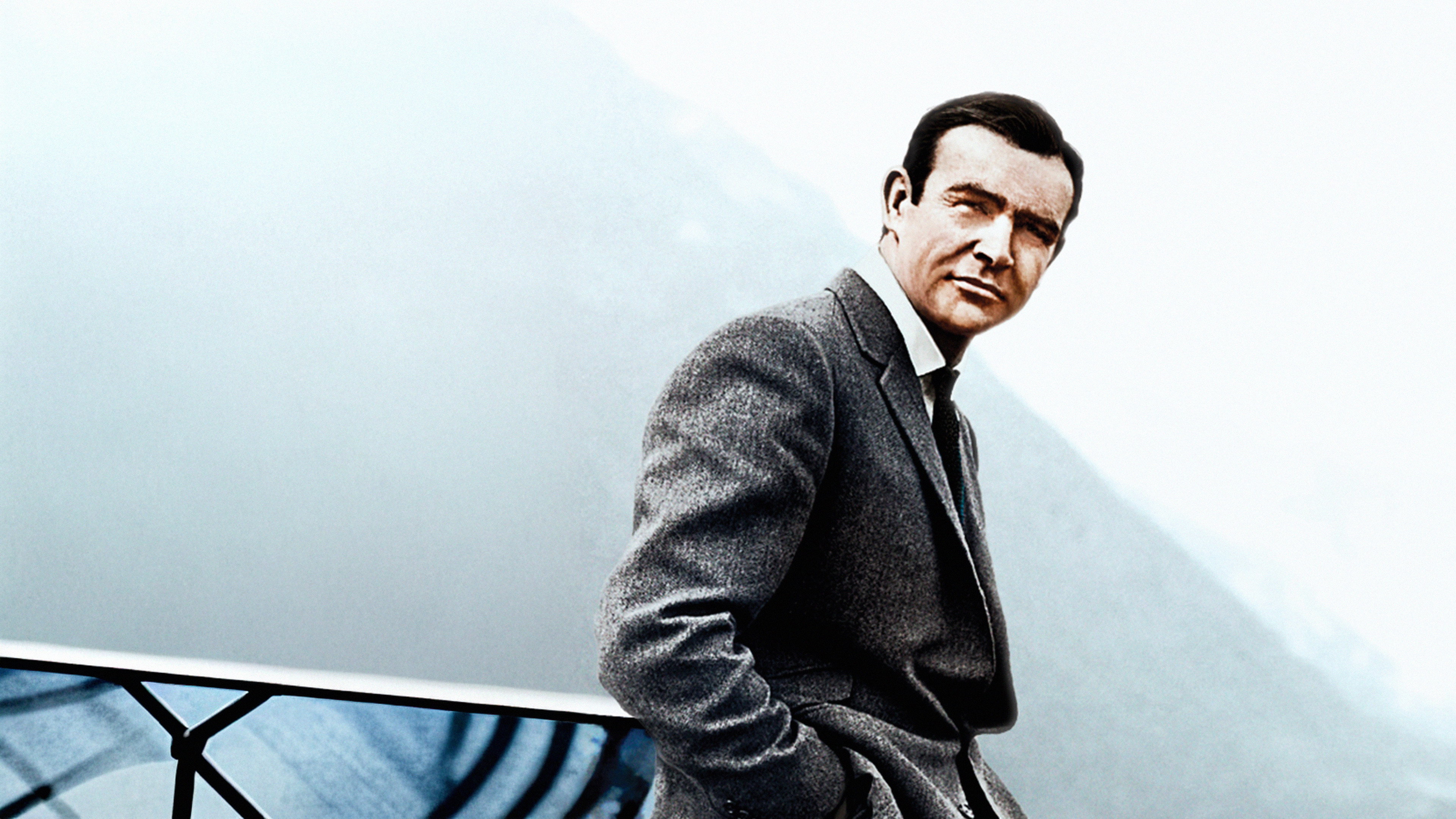
James Bond Timeline: Every Film in Story Order
The James Bond timeline is 25 EON Productions films from Dr. No (1962) to No Time to Die (2021): twenty loosely linked missions with five actors, then one connected story across five Daniel Craig films. Two further films, Casino Royale (1967) and Never Say Never Again (1983), were made outside EON and sit beside the timeline rather than inside it.
The James Bond Timeline in Order


How Does the James Bond Timeline Work?
The James Bond timeline works as two structures: twenty EON films that play as standalone missions in release order, followed by five Daniel Craig films that form a single continuous story. The earlier films change the lead actor without announcing a reboot, so release order and story order are the same list.
How many films are there? There are 25 official EON Productions films, and the count reaches 27 once the two non EON films are added. A twenty sixth official film does not exist yet, because the next one is still in development with no title and no release date.
Who is the longest running 007? Roger Moore made the most official films, seven, while Daniel Craig has the longest span between first and last official release, 2006 to 2021. Sean Connery made six official films and one more outside EON, and counting Never Say Never Again his span runs 1962 to 1983, longer than either, which is why the word official matters.
| Actor | Official films | First and last release year |
|---|---|---|
| Sean Connery | 6 | 1962 to 1971 |
| George Lazenby | 1 | 1969 |
| Roger Moore | 7 | 1973 to 1985 |
| Timothy Dalton | 2 | 1987 to 1989 |
| Pierce Brosnan | 4 | 1995 to 2002 |
| Daniel Craig | 5 | 2006 to 2021 |
Sean Connery Era: Dr. No to You Only Live TwiceSpoilers
The Connery era opens with Dr. No (1962), directed by Terence Young, and its first five films build the one thread that links the early series: the criminal organization SPECTRE. In Dr. No, Bond travels to Jamaica after the murder of John Strangways, teams up with Felix Leiter and the boatman Quarrel, and watches Dr. No fall into his own reactor pool. The film ends with SPECTRE still out there. Dr. No had its UK premiere on October 7, 1962 and its US release on May 8, 1963 (both reported), so American audiences met Bond more than six months after British ones.
From Russia with Love (1963) follows with Kronsteen's chess plan, Red Grant on the Orient Express and a Venice finish where Tatiana Romanova shoots Rosa Klebb. It had its UK premiere on October 10, 1963 (reported), its UK release on October 11, 1963 (reported) and its US release on April 8, 1964 (reported). Goldfinger (1964), directed by Guy Hamilton, moves to Fort Knox, where the plan is to make the gold radioactive and Bond is left handcuffed to the bomb with seven seconds on the clock. It had its UK premiere on September 20, 1964 (reported) and its US release on December 22, 1964 (confirmed).
Thunderball (1965) is the big practical production: a hijacked RAF bomber, two atomic bombs and an underwater battle around Largo's yacht, the Disco Volante, which won John Stears an Oscar for Special Visual Effects. Here the US came first, with a US release on December 21, 1965 (reported) and a UK premiere a week later, on December 28, 1965 (reported).
You Only Live Twice (1967), directed by Lewis Gilbert, has Bond fake his own death in Hong Kong, fly the armed autogyro Little Nellie over a volcano, and finally meet Blofeld in person, played by Donald Pleasence. Blofeld blows up his base and escapes, which hands the next film its villain. The film had its UK premiere on June 13, 1967 (reported) and its US release on the same day (confirmed).
George Lazenby and On Her Majesty's Secret ServiceSpoilers
On Her Majesty's Secret Service (1969), directed by Peter R. Hunt, is the only film with George Lazenby as Bond, and it is the hinge of the early timeline because it changes what Bond has to lose. Bond saves Tracy Di Vicenzo, played by Diana Rigg, from drowning herself, and her father, the crime boss Marc Ange Draco, offers help in finding Blofeld in return for Bond courting her. The trail ends at Piz Gloria in the Swiss Alps, where Telly Savalas plays a Blofeld who is conditioning young women to spread a plague.
The film is the series' longest of its first decade at 142 minutes, and it spends that time on ski chases, an avalanche and a bobsled finish before turning tragic. Bond proposes to Tracy in a barn and marries her in Portugal, and as they drive away Blofeld and Irma Bunt shoot at the car and kill her. The film had its UK premiere on December 18, 1969 (reported) and its US release on the same date (reported). Because Blofeld escapes, On Her Majesty's Secret Service leaves a revenge thread open for the next film.
Diamonds Are Forever: Connery Returns for the Blofeld RevengeSpoilers
Diamonds Are Forever (1971) is Sean Connery's last official Bond film and picks up Bond's hunt for Blofeld after the death of Tracy Di Vicenzo. Directed by Guy Hamilton, it has Bond kill a Blofeld double and then the man himself, with Charles Gray in the role, before M sends him to follow a diamond smuggling pipeline. Bond takes the identity of the smuggler Peter Franks, meets Tiffany Case in Amsterdam and follows the stones to Las Vegas, where the odd assassins Mr. Wint and Mr. Kidd are cleaning up the pipeline.
The laser satellite plot, Willard Whyte's stolen business and the oil rig base off Baja California all feed one big set piece, with Bond wrecking the control room using the rig's crane. Gray had already appeared in You Only Live Twice as Dikko Henderson, so the same actor carries two roles in the same run of films. The film closes on a ship home to Britain, where Wint and Kidd, disguised as waiters, hide a bomb in a dinner course and Bond sends both overboard.
The US release came first, on December 17, 1971 (reported), with the UK premiere following on December 30, 1971 (reported). See Diamonds Are Forever for the full film record.
Roger Moore Era: Live and Let Die to A View to a KillSpoilers
The Roger Moore era is seven films long, from Live and Let Die (1973) to A View to a Kill (1985), and it gives Moore the most films of any actor on the official list. In Live and Let Die, directed by Guy Hamilton, Bond follows three murdered agents to Dr. Kananga, who also runs a Harlem operation as Mr. Big, and the film ends with Kananga swelling up after swallowing a compressed gas pellet. The US release came first, on June 27, 1973 (confirmed), and the UK premiere followed on July 6, 1973 (reported). The Man with the Golden Gun (1974) pits Bond against the assassin Scaramanga, played by Christopher Lee, and includes the AMC Hornet corkscrew jump that Guinness World Records lists as the first astro spiral stunt on film. Its US release on December 18, 1974 (reported) came a day before its UK premiere on December 19, 1974 (reported).
The Spy Who Loved Me (1977), directed by Lewis Gilbert, adds Jaws, the KGB agent Major Anya Amasova and a Lotus Esprit that turns into a submarine, a prop later sold at auction for $989,000 to Elon Musk. Its US release on July 13, 1977 (reported) preceded its UK premiere on July 20, 1977 (reported). Moonraker (1979) takes the same crew into orbit, where Jaws switches sides and Hugo Drax is thrown out of his own space station. It had its UK premiere on June 27, 1979 (reported) and its US release on June 29, 1979 (reported). Jaws returns in both films, and Sheriff J.W. Pepper appears in the first two Moore films.
For Your Eyes Only (1981) is John Glen's first film as director and a grounded hunt for the sunken ATAC system, with Bond destroying the device by throwing it off a cliff rather than handing it to General Gogol. It had its UK premiere on June 24, 1981 (reported) and its US release on June 26, 1981 (confirmed). Octopussy (1983) has Bond defuse a nuclear bomb while dressed as a clown, with Robert Brown now in the role of M. It had its UK premiere on June 5, 1983 (reported) and its US release on June 10, 1983 (reported).
A View to a Kill (1985) ends on the Golden Gate Bridge, where Max Zorin falls to his death, and it was Roger Moore's last outing as Bond. The US release came first, on May 24, 1985 (reported), followed by the UK release on June 13, 1985 (reported).
Timothy Dalton Era: The Living Daylights and Licence to KillSpoilers
The Timothy Dalton era is two films, The Living Daylights (1987) and Licence to Kill (1989), both directed by John Glen. In The Living Daylights, Bond helps General Koskov defect from Czechoslovakia, spares the cellist Kara Milovy instead of killing her, and learns the defection was staged by Koskov and the arms dealer Brad Whitaker. The film ends with Whitaker dead and Bond reunited with Kara at a concert in Vienna. It carries John Barry's last Bond score. It had its UK premiere on June 29, 1987 (reported) and its US release on July 31, 1987 (confirmed).
In Licence to Kill, Bond is about to serve as best man at the wedding of Felix Leiter, played here by David Hedison, when the drug lord Franz Sanchez escapes and has Leiter's bride killed and Leiter maimed. M takes away Bond's license to kill when he refuses to step back, and Bond finishes the job alone in a tanker chase through the desert. Licence to Kill is rated 15 in the UK and PG-13 in the US. It had its UK premiere on June 13, 1989 (reported) and its US release on July 14, 1989 (confirmed). Bond ends the film reinstated, and then the series pauses for six years until GoldenEye in 1995.
Pierce Brosnan Era: GoldenEye to Die Another DaySpoilers
The Pierce Brosnan era is four films, from GoldenEye (1995) to Die Another Day (2002), and it brings Bond into the post-Cold War world. GoldenEye, directed by Martin Campbell, opens in 1986 with Bond and Alec Trevelyan infiltrating a Soviet chemical weapons plant, then jumps nine years to a world after the Soviet Union has collapsed. Trevelyan, who faked his death, leads the Janus syndicate and plans to use the GoldenEye satellite to wreck the British economy. Bond drops him from the antenna platform as the base collapses. Judi Dench plays M across all four films. The US release came first, on November 17, 1995 (confirmed), with the UK premiere on November 23, 1995 (reported).
Tomorrow Never Dies (1997) pits Bond against the media tycoon Elliot Carver, who sinks a British warship to start a war with China, and teams him with Michelle Yeoh as Wai Lin. It had its UK premiere on December 11, 1997 (reported) and its US release on December 19, 1997 (confirmed). The World Is Not Enough (1999) brings a Thames boat chase, the bomb in a payment that kills Sir Robert King inside MI6, and Elektra working with Renard. It was the last film for Desmond Llewelyn as Q, who died in a car crash on December 19, 1999 after 17 Bond appearances, and John Cleese is credited as R. Its US release on November 19, 1999 (reported) came a week before its UK premiere on November 26, 1999 (reported).
Die Another Day (2002), directed by Lee Tamahori, opens with 14 months of torture in North Korea and has Cleese credited as Q. Gustav Graves turns out to be Colonel Moon, and Bond defeats him by pulling him into the plane's engine. The film sets up nothing further beyond Bond returning to service. It had its UK premiere on November 17, 2002 (reported) and its US release on November 22, 2002 (reported).
Daniel Craig Timeline Part One: Casino Royale and Quantum of SolaceSpoilers
The Daniel Craig timeline begins with a fresh origin in Casino Royale (2006), directed by Martin Campbell, where Bond earns his double 0 status by killing a corrupt MI6 section chief and his contact in Prague. He stops a bomb maker at Miami airport, then beats the banker Le Chiffre in a high stakes poker game at Casino Royale in Montenegro. Vesper Lynd travels with him and holds the money. The story ends in Venice, where Vesper drowns in a sinking elevator cage and Bond later shoots Mr. White in the leg at a lakeside estate and introduces himself by name. Casino Royale (2006) had its UK premiere on November 16, 2006 (reported) and its US release on November 17, 2006 (confirmed). See Casino Royale (2006) for the film record.
Quantum of Solace (2008), directed by Marc Forster, picks up directly from that ending: Bond brings Mr. White to M for questioning, discovers a traitor inside MI6 and follows the money to Haiti and to Dominic Greene. Greene's plan is to control Bolivia's water supply. At 106 minutes it is the shortest film in the series, and its title comes from a 1960 Ian Fleming short story. It had its UK premiere on October 29, 2008 (reported), its UK release on October 31, 2008 (reported) and its US release on November 14, 2008 (confirmed). Bond finishes the film by leaving Vesper's necklace in the snow and telling M that he never left the service.
Daniel Craig Timeline Part Two: Skyfall, Spectre and No Time to DieSpoilers
The second half of the Daniel Craig timeline runs Skyfall (2012), Spectre (2015) and No Time to Die (2021), in that order. Skyfall, directed by Sam Mendes, had its UK premiere on October 23, 2012 (reported), its UK release on October 26, 2012 (confirmed) and its US release on November 9, 2012 (reported). In Skyfall, Eve shoots Bond by mistake during a train fight in Istanbul, he falls into a river and returns when MI6 is attacked, and Raoul Silva's revenge on M ends at Bond's childhood home in Scotland. M dies, and Gareth Mallory takes over the role. The film grossed $1.11 billion worldwide on a $200 million budget.
Spectre, also directed by Mendes, had its UK premiere on October 26, 2015 (reported) and its US release on November 6, 2015 (reported). In Spectre, a message from the previous M sends Bond to Mexico City on the Day of the Dead, where he takes an octopus ring from a dead attacker. Franz Oberhauser, now Blofeld, says he is Bond's adoptive brother, and the organization is revealed to be behind Bond's earlier enemies. Q hands Bond a restored Aston Martin DB5 at the end, and Bond drives off with Madeleine Swann.
No Time to Die (2021), directed by Cary Joji Fukunaga, runs 163 minutes, the longest in the series. It had its UK premiere on September 28, 2021 (reported) at the Royal Albert Hall, its UK release on September 30, 2021 (confirmed) and its US release on October 8, 2021 (confirmed). Five years after Madeleine leaves, Bond is retired in Jamaica when Felix Leiter recruits him to find a kidnapped scientist tied to the DNA targeting nanobots of Project Heracles. Bond learns he has a daughter, Mathilde, and kills Lyutsifer Safin, but he is infected and cannot safely touch his family. He stays on the island as missiles strike it and dies.
Where Do Casino Royale (1967) and Never Say Never Again Fit?Spoilers
Casino Royale (1967) and Never Say Never Again (1983) do not fit inside the timeline at all, because neither was made by EON Productions. The 25 EON films are the official series; Casino Royale (1967) and Never Say Never Again are unofficial, non EON films.
Casino Royale (1967) was produced by Charles K. Feldman, who owned the rights to Ian Fleming's novel, and it is a spoof directed by five people, including John Huston. David Niven plays a retired Sir James Bond, Peter Sellers plays Evelyn Tremble, and Ursula Andress plays Vesper Lynd. The plot turns on giving the name James Bond to several agents so SMERSH cannot tell which is real. It ends when the villain Jimmy Bond swallows an atomic pill and the casino blows up. The film had its UK premiere on April 23, 1967 (reported) and its US release on April 28, 1967 (confirmed).
Never Say Never Again was made independently by Jack Schwartzman's Taliafilm with Kevin McClory as executive producer, and it retells the Thunderball story with an older Bond played by Sean Connery, directed by Irvin Kershner. SPECTRE steals two nuclear warheads, Largo is played by Klaus Maria Brandauer, Max von Sydow plays Blofeld, and Domino kills Largo with a spear gun. It had its US release on October 7, 1983 (confirmed) and its UK premiere on December 15, 1983 (reported). The US release landed months after Octopussy's US release on June 10, 1983 (reported), so two Bond films competed in the same year. Neither film changes the story of the 25 official entries.
Where Will Bond 26 Fit in the James Bond Timeline?
Bond 26 has no announced place in the James Bond timeline: it is untitled, in development and has no release date. Confirmed so far: Amazon MGM Studios has creative control, Denis Villeneuve was announced as director in June 2025, Steven Knight is writing, Amy Pascal and David Heyman are producing, and Nina Gold is casting director. Pascal has indicated a UK shoot. No Time to Die ends the Craig arc, and no announcement says whether the next film continues from it or starts over.
The lead role is not confirmed. TheWrap reported on October 22, 2026, citing Deadline insiders, that final screen tests were under way in London. That is a report, not a confirmation, and Amazon MGM has confirmed no names. Status, sources and updates sit on the Bond 26 status page.
James Bond Timeline Explained: One Face Changes, One Story BeginsSpoilers
The James Bond timeline holds together as two halves, an anthology of standalone missions before Casino Royale (2006) and one connected story from that film on. Before that film, the series behaves like a long running anthology: M, Moneypenny and Q keep turning up, the face changes, and almost nothing depends on what came before except SPECTRE and the Tracy thread. Blofeld alone is played by Donald Pleasence, Telly Savalas, Charles Gray and later Christoph Waltz in the EON films, and Gray had already played Dikko Henderson in You Only Live Twice, so one actor even carries two roles without anyone explaining it.
The seams are where a continuity reader finds the fun. Felix Leiter is Jack Lord, Cec Linder, Rik Van Nutter, Norman Burton, David Hedison, John Terry and finally Jeffrey Wright, and Hedison plays him in both Live and Let Die and Licence to Kill, sixteen years apart. Joe Don Baker plays Brad Whitaker in The Living Daylights and then Jack Wade in GoldenEye and Tomorrow Never Dies.
No, James Bond is not a code name passed between agents in the EON films. The 1967 spoof is the one film that literally does it, when Sir James Bond hands the name to several agents, and that is the closest the series comes to the theory. Diamonds Are Forever has Connery's Bond hunting Blofeld for the death of Tracy, whom Lazenby's Bond married, so the story follows one man across the actor change.
The Craig films are where the timeline becomes a true serial, and the one big retcon is Spectre, which says the organization stood behind Bond's earlier enemies and makes Blofeld his adoptive brother. My opinion: that works better as a link between films than as a character twist, because Mr. White and the group around Le Chiffre and Greene were already in place. Skyfall ends with M's death, and Spectre opens with a message from the previous M, with Ralph Fiennes now in the role.
If you want one clean story, watch the five Craig films in order. For the older run, take Dr. No through You Only Live Twice for the SPECTRE thread, then On Her Majesty's Secret Service followed directly by Diamonds Are Forever for the Tracy thread. The full release sequence is on james bond movies in order.
Facts
- Dr. No (1962) had its UK premiere on October 7, 1962, a date reported by TMDB. TMDB, checked 2026-11-02
- Dr. No (1962) had its US release on May 8, 1963, a date reported by The Numbers. The Numbers, checked 2026-11-02
- Skyfall (2012) had its UK premiere in London on October 23, 2012. Screen Daily, checked 2026-11-02
- Spectre (2015) had its US release on November 6, 2015, a date reported by The Numbers. The Numbers, checked 2026-11-02
- No Time to Die (2021) had its US release on October 8, 2021. The Numbers, checked 2026-11-02
- On Her Majesty's Secret Service (1969) runs 142 minutes. TMDB, checked 2026-11-02
- No Time to Die (2021) runs 163 minutes. TMDB, checked 2026-11-02
- Quantum of Solace (2008) runs 106 minutes, the shortest film in the series. Box Office Mojo, checked 2026-11-02
- Skyfall (2012) grossed $1,110,111,413 worldwide. Box Office Mojo, checked 2026-11-02
- Never Say Never Again (1983) had its US release on October 7, 1983. Box Office Mojo, checked 2026-11-02
- Casino Royale (1967) had its US release on April 28, 1967. The Numbers, checked 2026-11-02
- The title Quantum of Solace (2008) was taken from a 1960 Ian Fleming short story. Screen Daily, checked 2026-11-02
FAQs
Who is the longest running 007 actor?
Roger Moore played 007 in the most official EON films, seven, from Live and Let Die (1973) to A View to a Kill (1985). Daniel Craig has the longest span among official films, 2006 to 2021. Sean Connery made six official films, and counting Never Say Never Again his span runs 1962 to 1983, longer than Moore's or Craig's.
Are there 25 or 26 Bond movies?
There are 25 official EON Productions films, from Dr. No (1962) to No Time to Die (2021). Counting the two non EON films, Casino Royale (1967) and Never Say Never Again (1983), the total is 27. A twenty sixth official film is not released: the next one is untitled and in development with no release date.
Was Spectre or Skyfall first?
Skyfall came first, and Spectre followed it. Skyfall had its UK premiere on October 23, 2012 (reported) and its US release on November 9, 2012 (reported). Spectre had its UK premiere on October 26, 2015 (reported) and its US release on November 6, 2015 (reported). Both were directed by Sam Mendes and star Daniel Craig.
What did Q stand for in James Bond?
The films never say what Q stands for; it is the codename of MI6's gadget chief. Dr. No credits the armorer as Major Boothroyd, played by Peter Burton. Desmond Llewelyn is credited as Q across 17 Bond appearances, including Thunderball (1965) and ending with The World Is Not Enough (1999). John Cleese is credited as R and then Q, and Ben Whishaw is Q from Skyfall (2012). Alec McCowen plays Q 'Algy' Algernon (Never Say Never Again).
What does 00 mean in MI6?
A double 0 number in MI6 is a license to kill held by an elite agent, and 007 is James Bond's. In Casino Royale (2006), Bond earns his 00 status by killing a corrupt MI6 section chief and his contact in Prague. In Licence to Kill (1989), M takes away his license to kill, and in Die Another Day (2002), M, played by Judi Dench, suspends his 00 status.
Is James Bond a book first?
Yes, James Bond began in Ian Fleming's novels before Dr. No (1962) brought him to film. Casino Royale (1967) was made by Charles K. Feldman, who owned the rights to Fleming's novel, and it is a spoof outside EON. Casino Royale (2006) is a separate film and the first of the Daniel Craig arc. The title Quantum of Solace (2008) was taken from a 1960 Fleming short story.