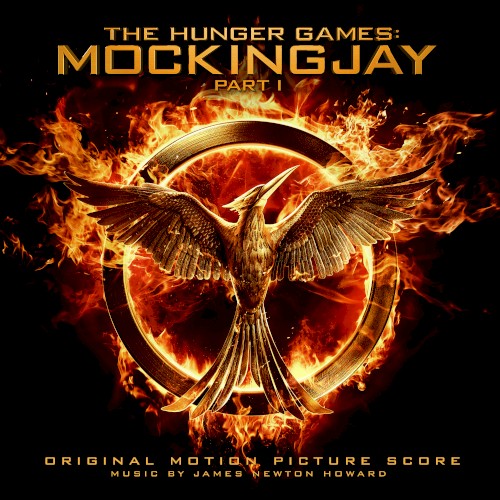
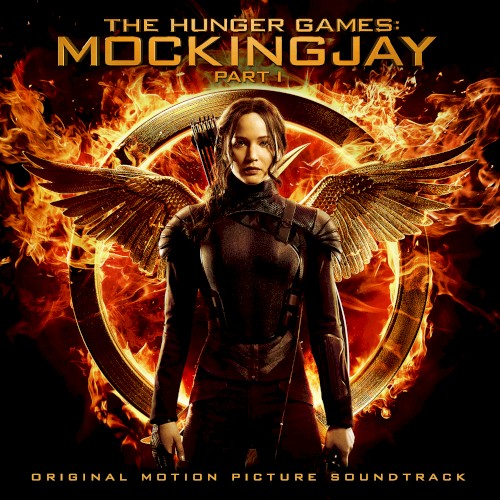
The ending of Mockingjay Part 1 is a rescue that succeeds on paper and fails in practice: Peeta is pulled out of the Capitol, but he has been brainwashed and violently attacks Katniss. He is locked away under medical care while the rebels look for a way to reverse the conditioning, and Coin announces that the rebels will target the Capitol stronghold in District 2. The film stops there and leads directly into mockingjay part 2.
So, why end on an attack rather than a victory? In my opinion, it is the most honest place to stop, because the film has spent its running time on propaganda, and the cost of that propaganda finally lands on a person. Peeta's televised messages were the reason Katniss agreed to be the Mockingjay, and the strangling scene turns that same screen war into physical harm. The film builds toward it patiently: the hospital visit filmed for the propaganda reel, the air raid that Snow sends in answer, the dam attack and the Capitol strike on District 13 all show that this war is fought with cameras as much as weapons. It could be argued that the story is stronger for withholding a battle, although I accept that some viewers read it as a pause rather than an ending.
Why does Peeta attack her, and is it a twist? The rescue team, which includes Gale, brings back a man the Capitol has conditioned to see Katniss as a threat, so the attack is the payoff of the broadcasts rather than a surprise. It also reverses the arc of the earlier films. In The Hunger Games (2012) Peeta is the person who protects her in front of the cameras, and here the same face on a screen is turned against her. Gale, who was whipped in catching fire, is the one who goes into the Capitol to fetch him, which gives the love triangle a bitter edge rather than a romantic one.
The production context explains the shape. Lionsgate announced on July 10, 2012 that the final book would be split into two films, and Francis Lawrence was confirmed to direct both in November 2012. TheWrap reports the two parts were shot back to back at a combined cost of about $250 million, so a closing image that hands over to the second film was a structural choice, not an accident of editing. Part 1 carries a $125 million budget and earned $762 million worldwide according to Box Office Mojo, yet it has the least conventional action of the four main films.
Perhaps the sharpest contrast is with the hunger games 2012, which was built around a televised contest, whereas this film is built around who controls the broadcast. At 123 minutes it is also the shortest of the four main films, against 146 for Catching Fire and 137 for Part 2. As such, anyone who wants resolution has to continue to Part 2, and the film is best treated as the first half of a single story that ends there.