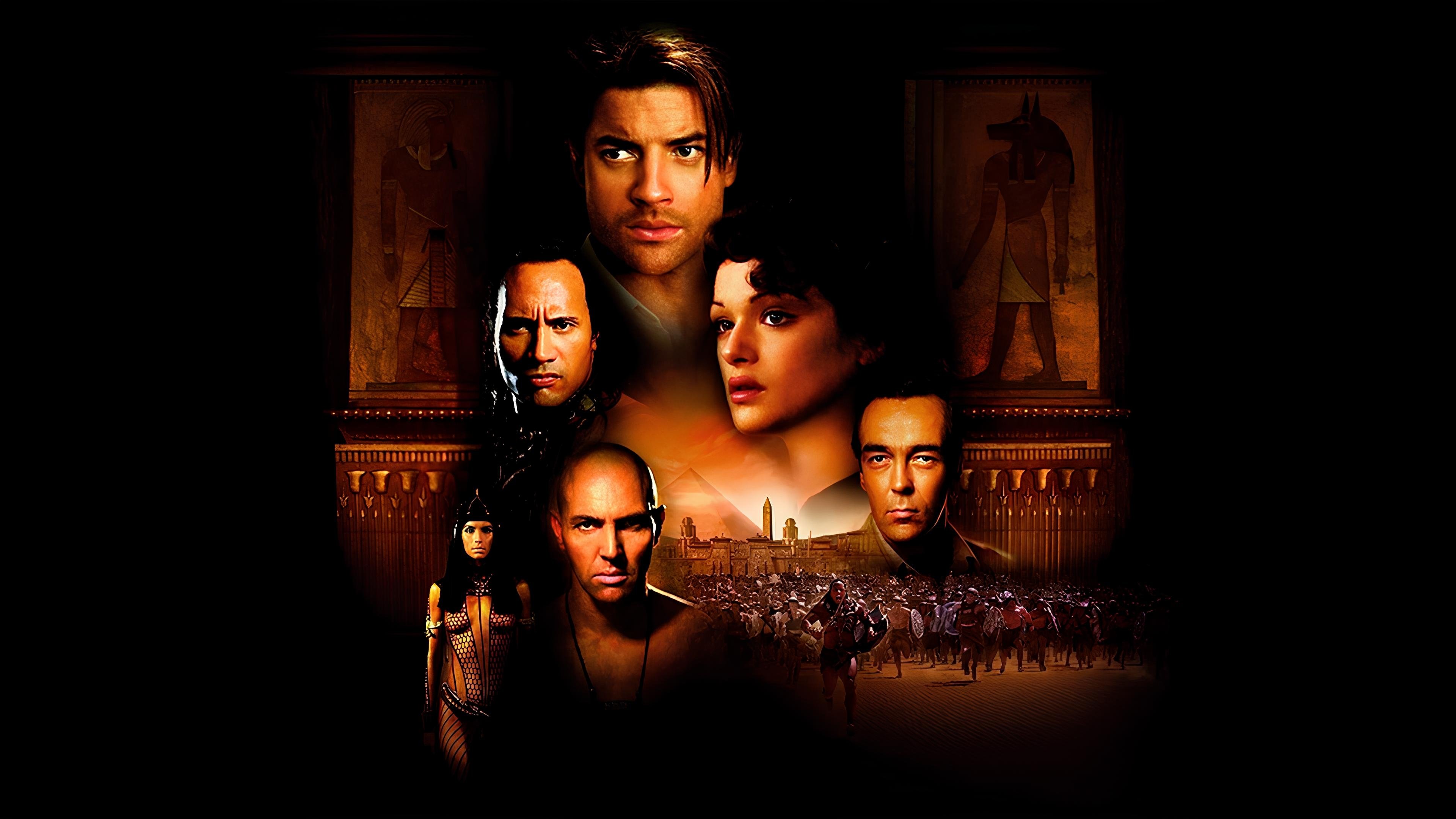
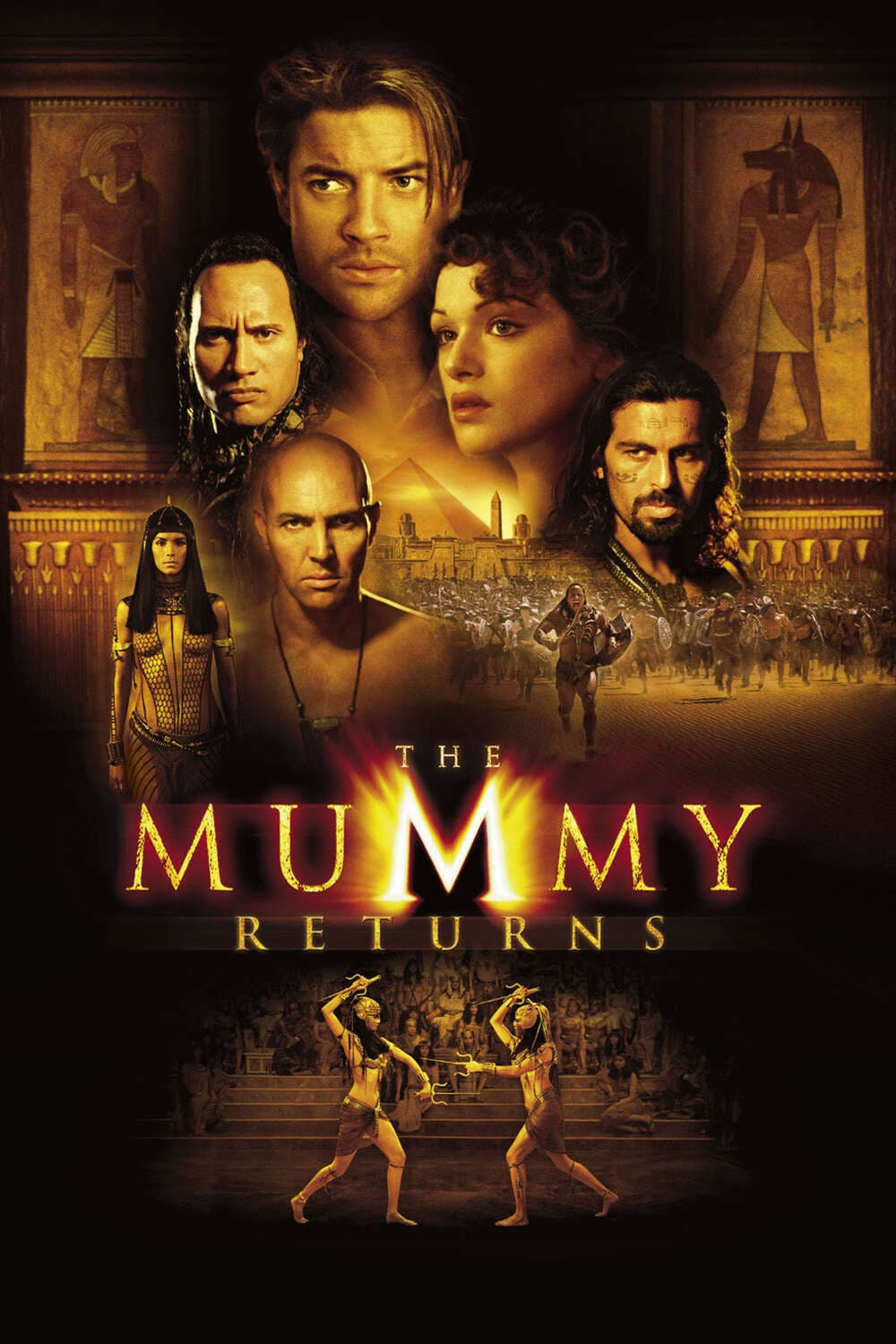
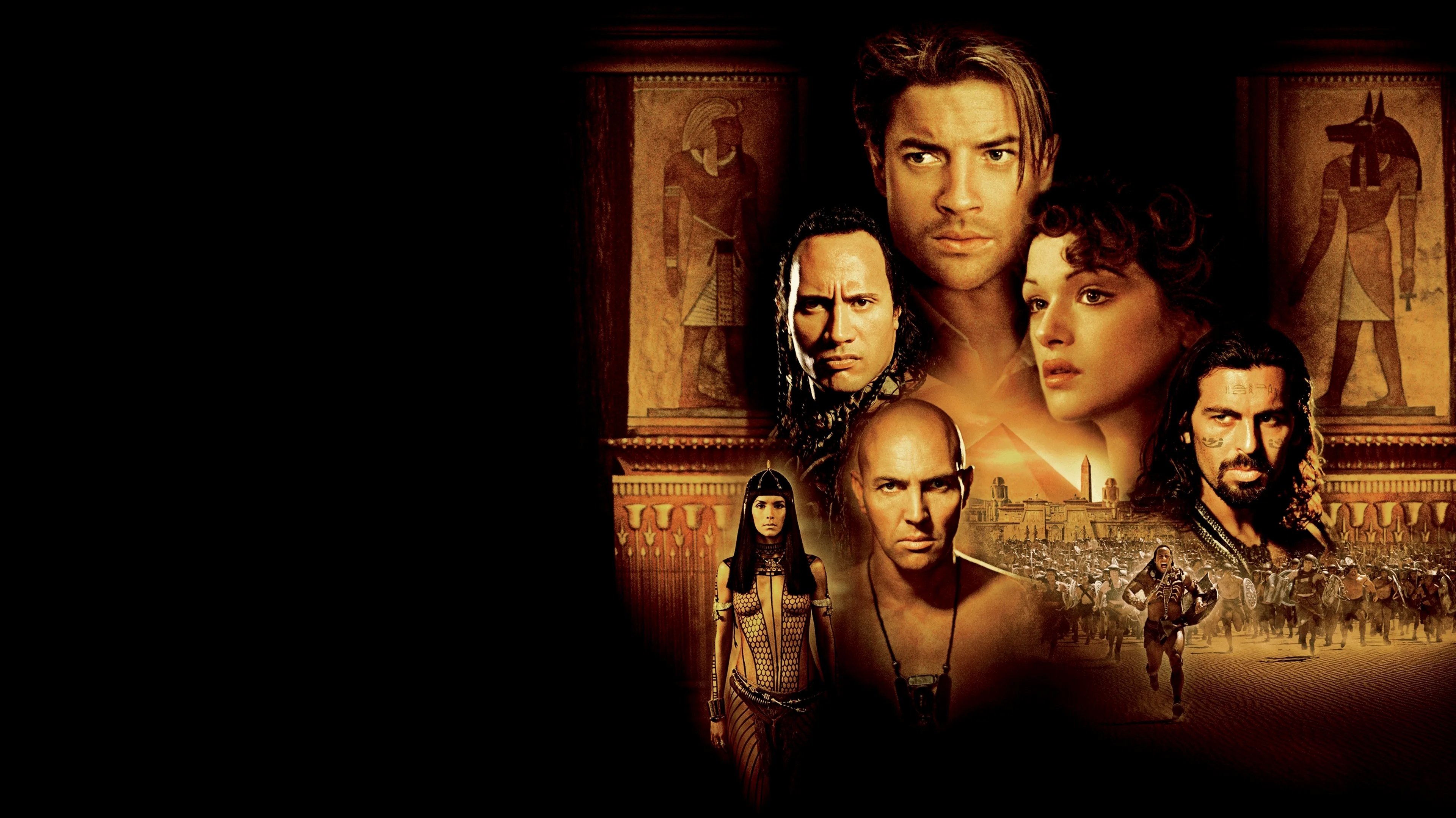
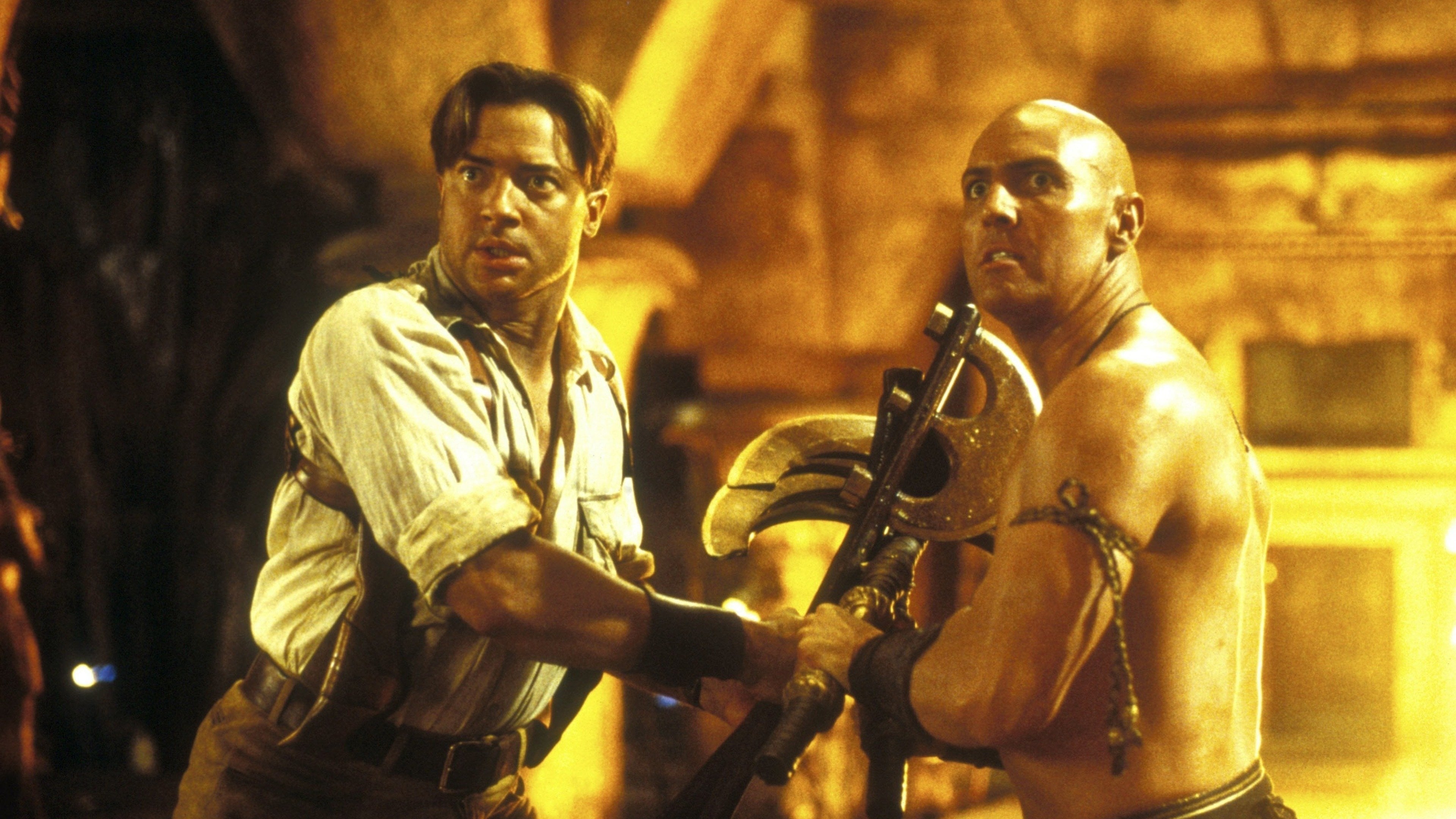
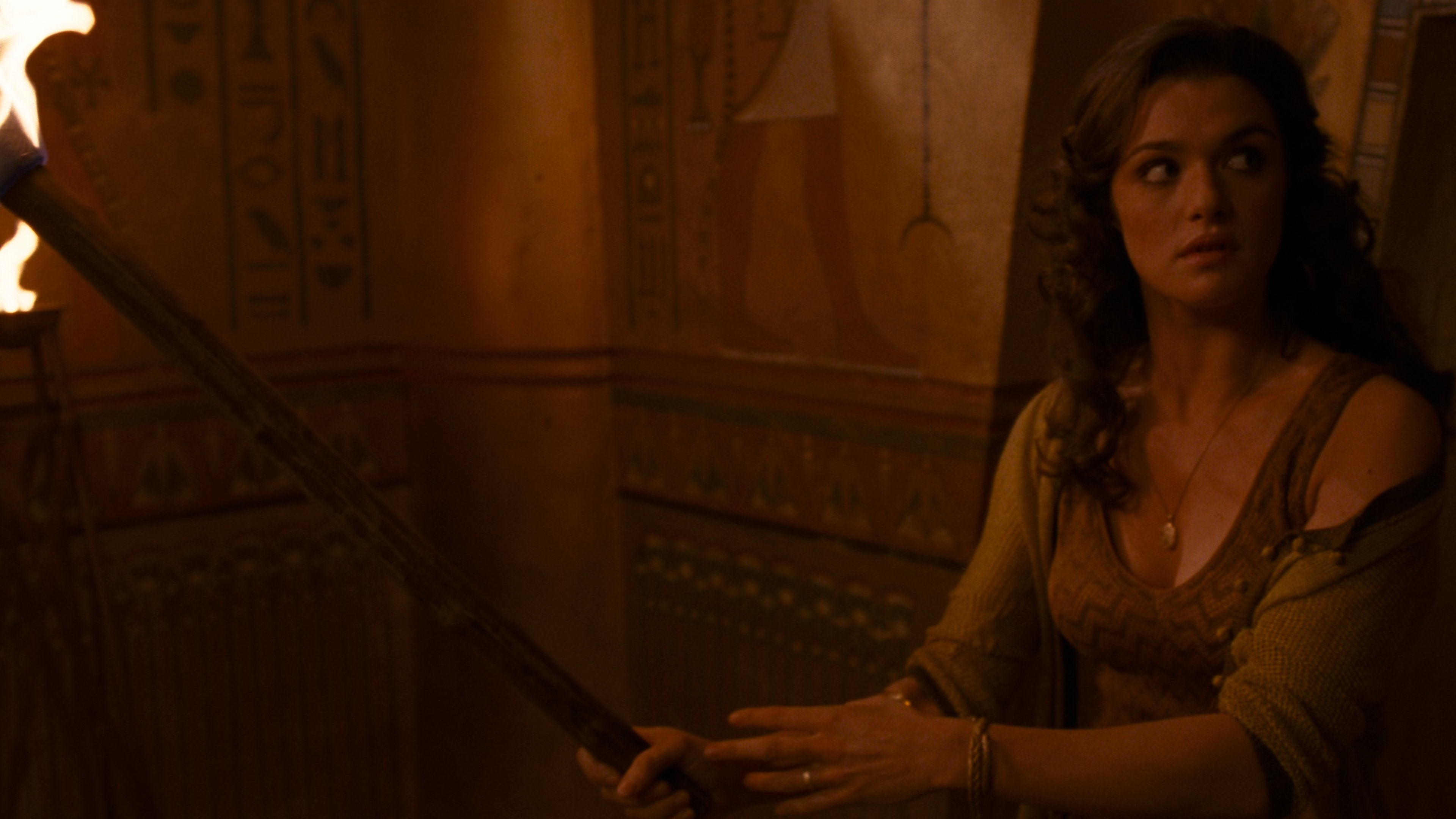
The ending closes both of the film's central threads: the Scorpion King is killed with the spear and his army is pulled back to the underworld, and Imhotep gives up his hold on the living world and falls away. As the oasis collapses, Anck-Su-Namun meets her end, and Izzy rescues the O'Connells and Jonathan in the repaired airship. They fly off into the sunset with the family reunited and safe.
Did Imhotep really love Anck-Su-Namun? The films say so. In The Mummy (1999), his forbidden affair with the pharaoh's mistress is the reason he is cursed, and in this sequel Meela is the vehicle for her return. In my opinion, the sequel is more interested in the idea of that love than in making it tender, and the finale reads Imhotep's fall as a man who has lost both his powers and his reason to hold on, more than a romantic sacrifice.
As a closing chapter, I think the ending works because it gives each hero a job. Evelyn, the reincarnation of Anck-Su-Namun's old enemy, saves Rick from falling, Alex and Jonathan use the Book of the Dead, and Rick holds the spear. It is crowded, perhaps, but it is clear who solves which problem. That being said, it is also the point where the film stops feeling like a tomb story and becomes a full action fantasy, which is a fair reason some fans prefer the leaner first film.
Which is better, The Mummy (1999) or The Mummy Returns? On the numbers, the sequel grossed more, but that is a matter of taste: the 1999 film is the more contained adventure, and the sequel is the bigger set piece machine. The saga moves on to China in 1946 with The Mummy: Tomb of the Dragon Emperor (2008). For our full ordering, see the mummy movies ranked.