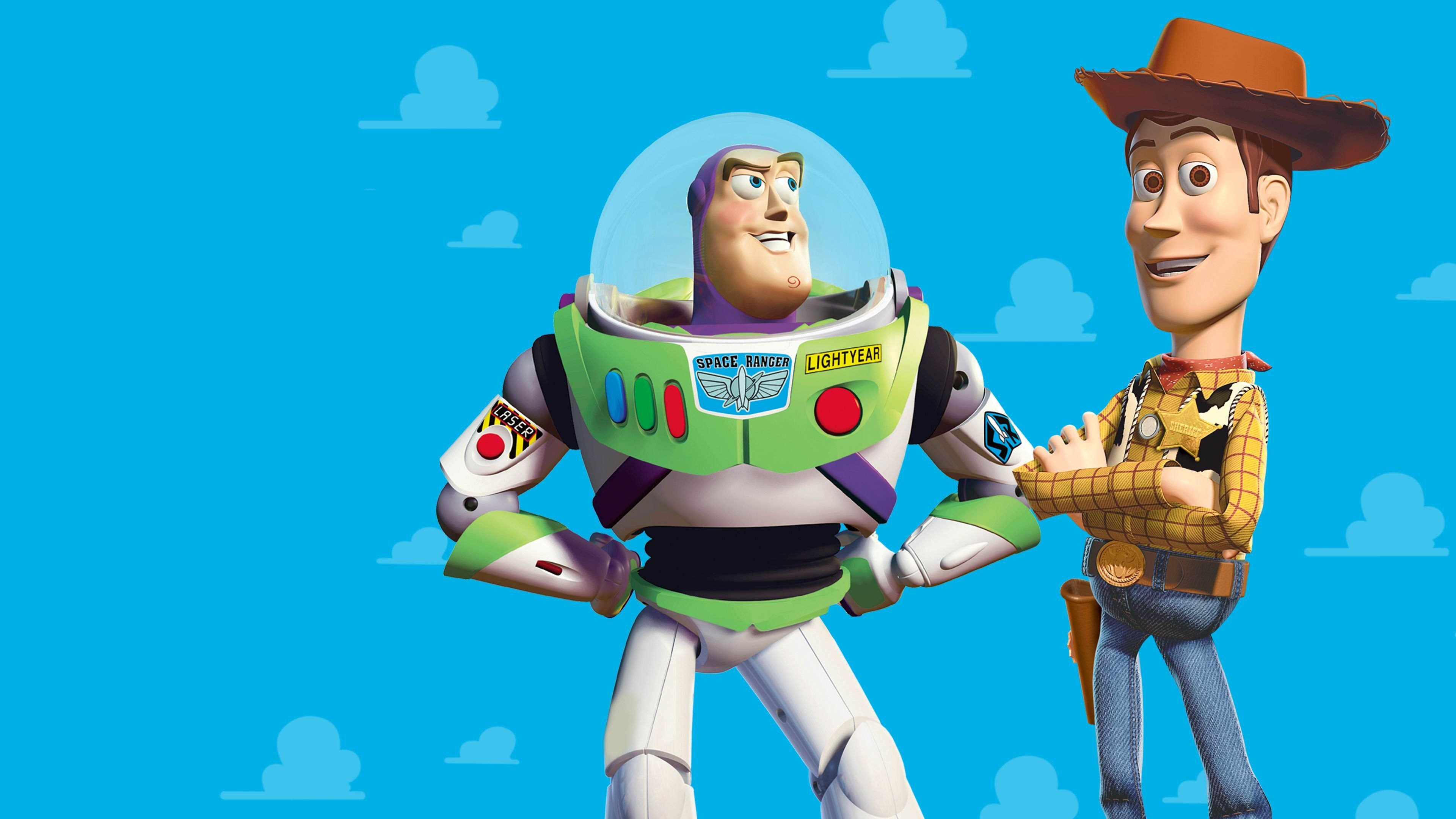
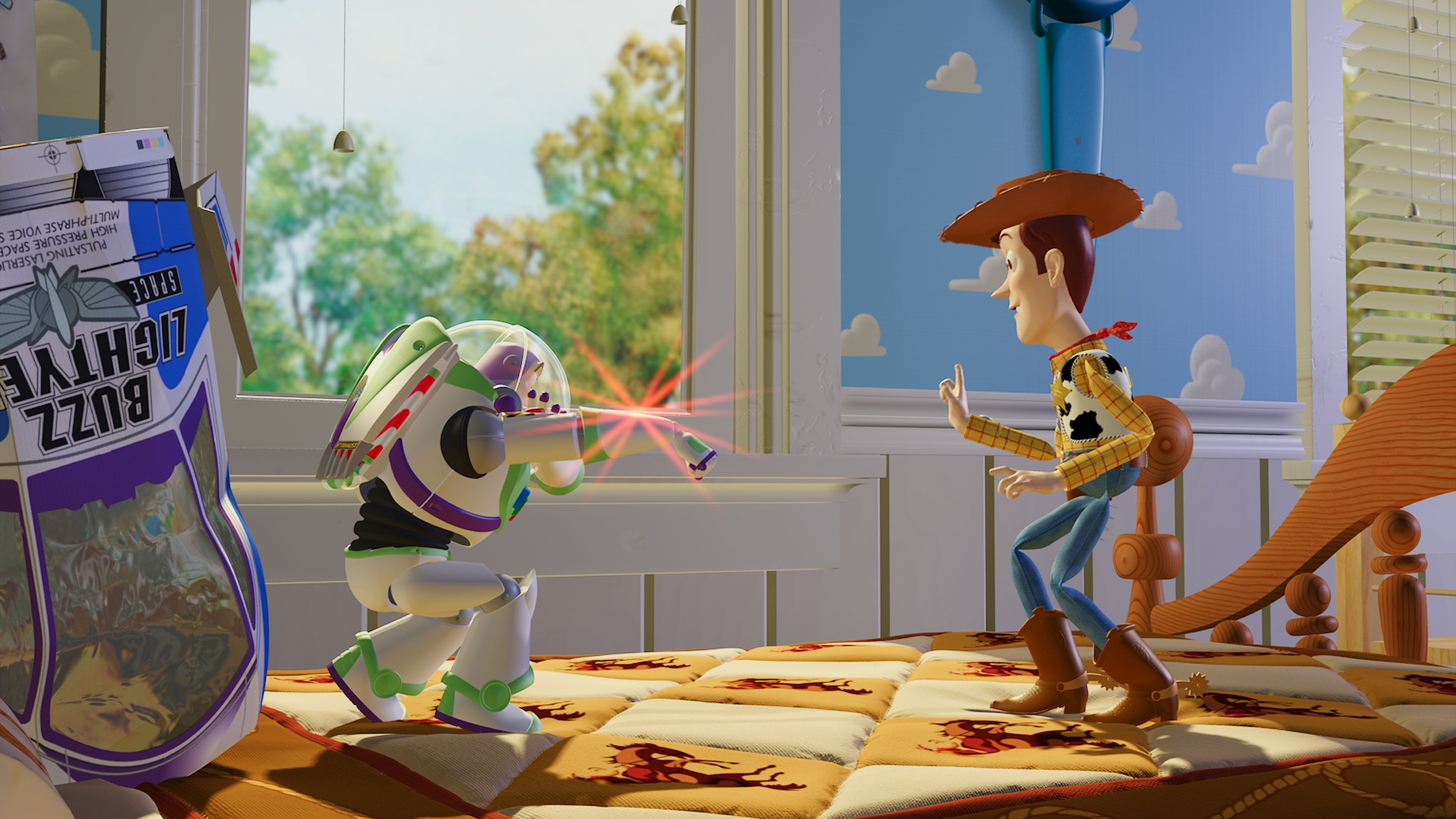
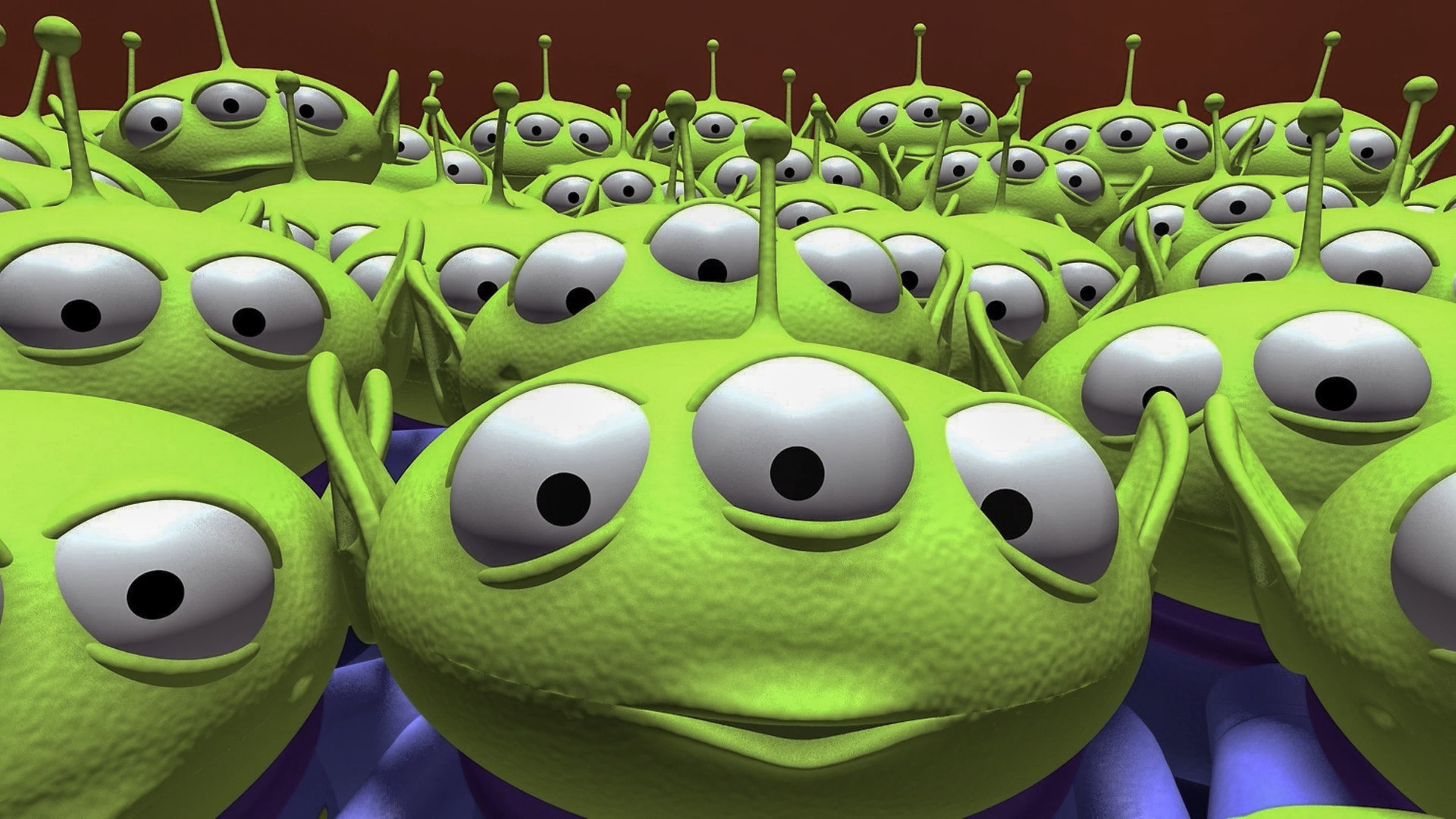
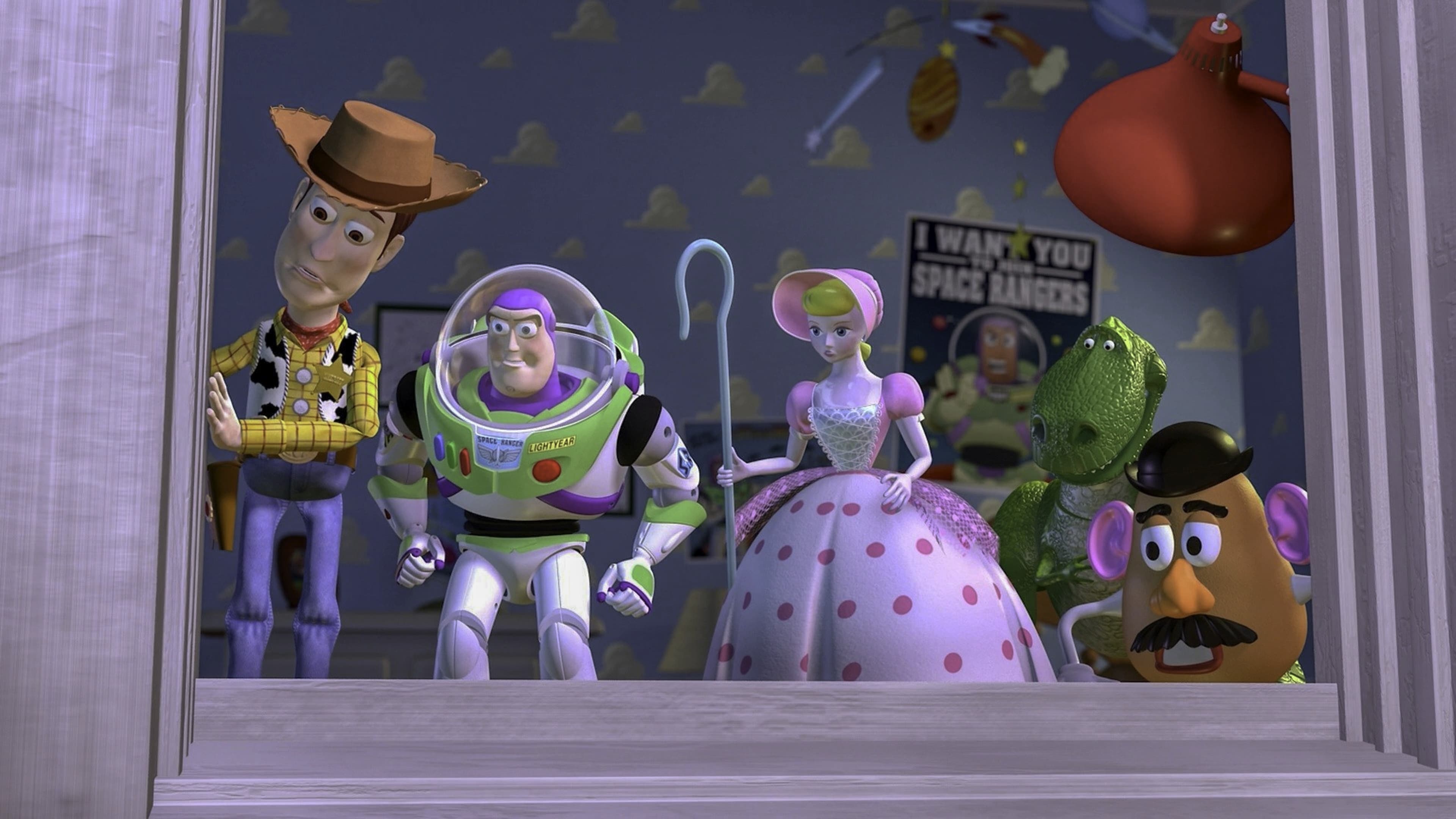
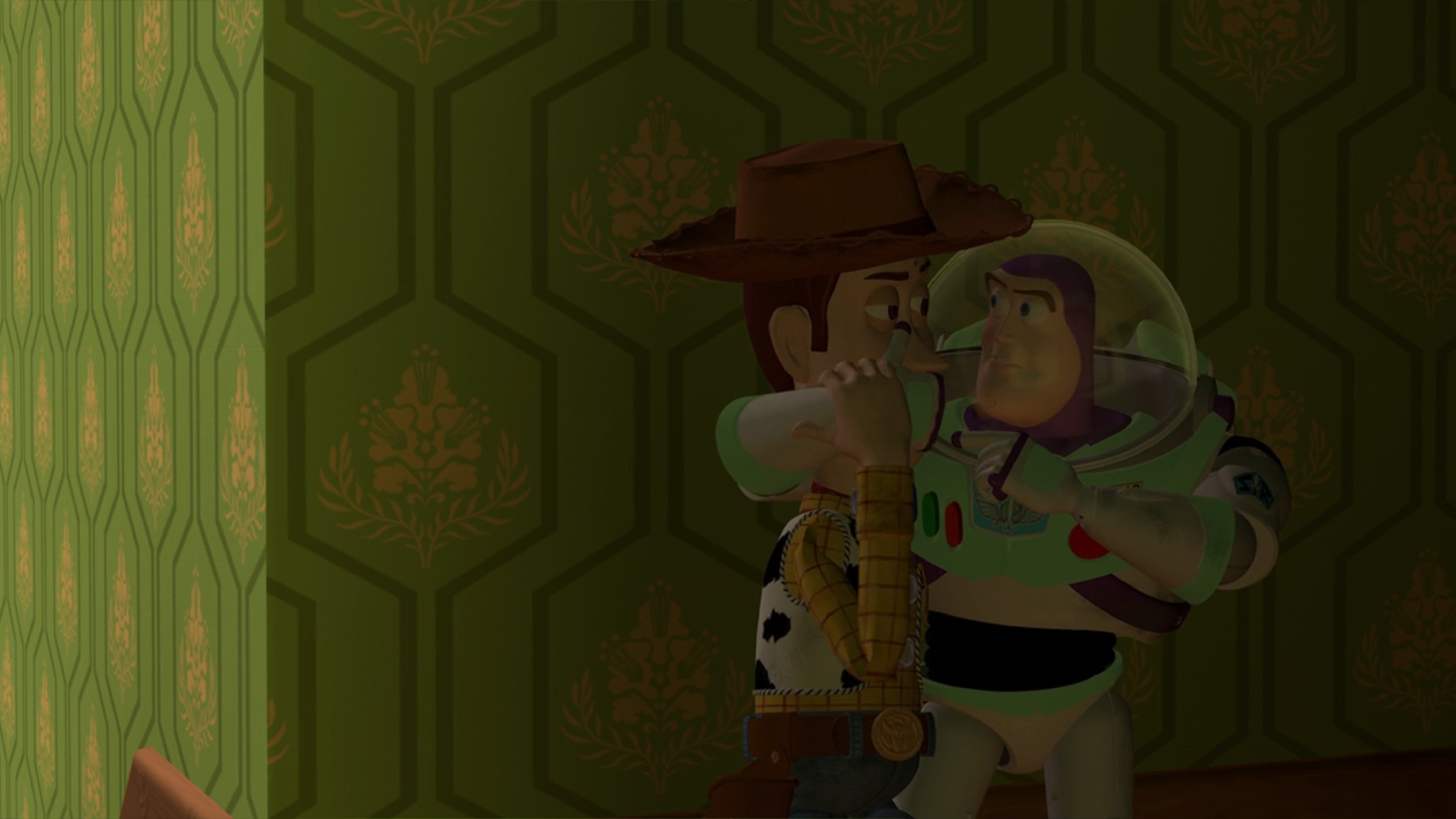
The ending of Toy Story (1995) shows Woody and Buzz back with Andy as true friends, and then closes at Christmas in the family's new house with a joke about the next rival.
The last stretch is a chase. Sid's rocket, strapped to Buzz, is what finally carries the two toys past the moving truck and into the family car. The jealousy that drove the whole story is gone by then, because Woody has spent the night in Sid's house learning that Buzz is a real friend and not a threat. The earlier turn matters here: Buzz sees the TV ad that proves he is only a toy, and Woody, the toy who started the trouble, is the one who talks him out of despair. The rescue works because each hero has already saved the other once.
Then comes the Christmas scene. The toys fear what gift Andy will get this time, and Andy receives a puppy. Woody and Buzz share a nervous smile as a new rival arrives. In my opinion, this is the smartest beat in the film. It repeats the first act exactly (a gift, a worried toy, a newcomer) but the two heroes now stand on the same side. It could be argued that Woody does not learn to stop feeling threatened, he learns to face the feeling with someone beside him, and that is a lesson children can actually use.
How does it compare with the sequels? Each later main film keeps the same fear and changes the shape of it. In Toy Story 2, Al McWhiggin steals Woody and the question becomes whether a toy should choose a collector's shelf over a child's room. In Toy Story 3, Andy is 17 and the toys end up in a donation box headed for Sunnyside Daycare. In Toy Story 4, Bonnie builds Forky from a spork and Woody meets Bo Peep again. In Toy Story 5, a frog shaped tablet called Lilypad is the rival, and the gift joke of 1995 has grown into a screen that competes for a child's attention. The puppy is the small, funny version of a worry the saga keeps returning to.
The craft behind the ending is worth a note too. Pixar's archive shows that early concept art for Woody went through many versions, including a gloomy design the archivist jokingly calls scary Woody, according to ABC7 News. The finished Woody is flawed but warm, and that choice is what makes a final scene built on a nervous smile land. A $30 million production could not afford big spectacle, and it did not need it: the film ends on a face, not an explosion. That being said, the toys are still waiting for what comes next, and for how the series follows that thread, see the toy story timeline.