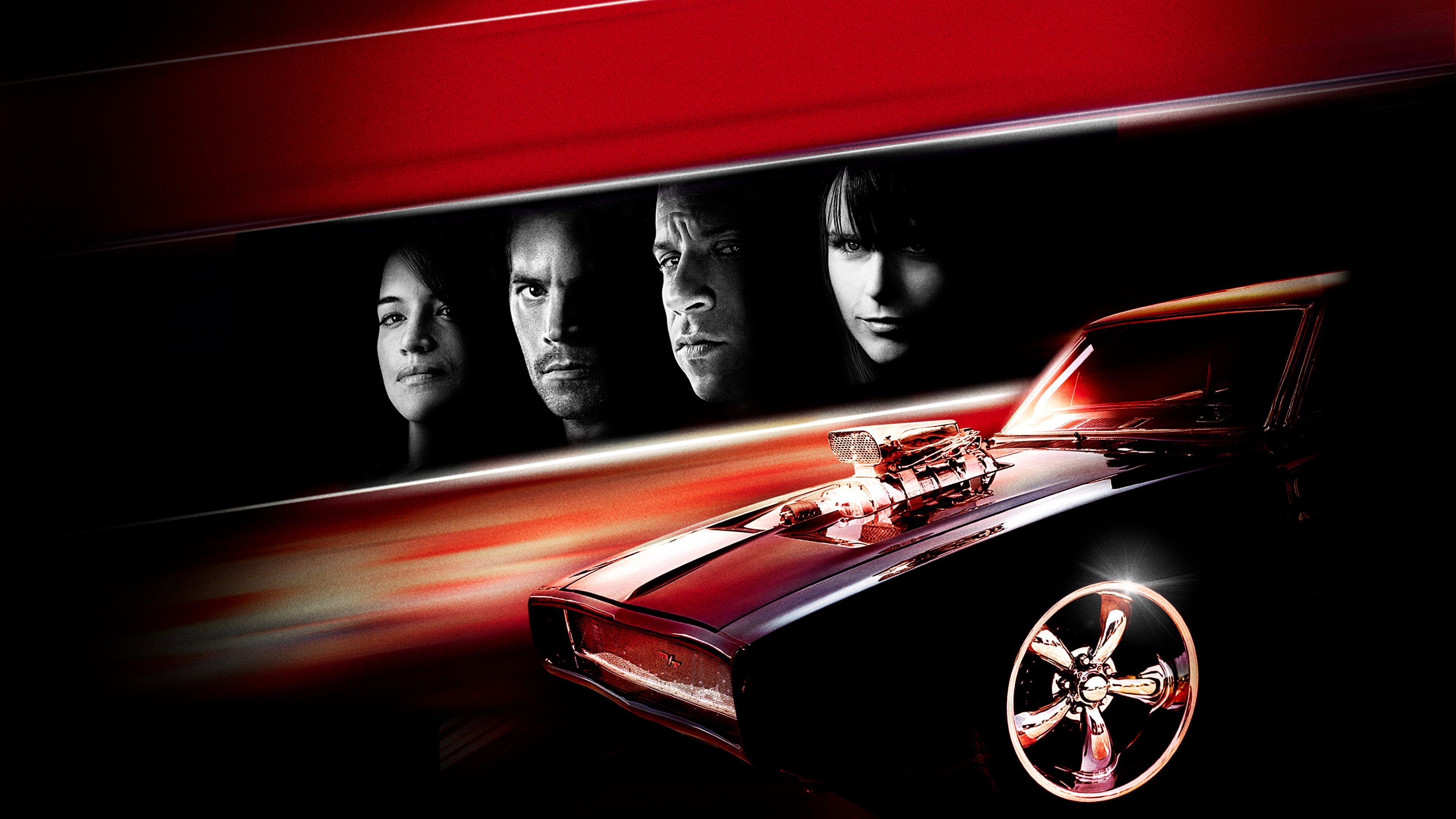
Fast and Furious Space: How the F9 Rocket Car Mission Works
The Fast and Furious space mission takes place in F9 (2021), directed by Justin Lin, when Roman Pearce and Tej Parker take a rocket car into orbit. They use a modified 1984 Pontiac Fiero to reach a satellite connected to Project Aries that cannot be disabled remotely.
Which Fast and Furious Movie Goes to Space?Spoilers
The Fast and Furious space mission takes place in F9 (2021), directed by Justin Lin. Roman Pearce and Tej Parker travel into orbit aboard a modified 1984 Pontiac Fiero equipped with rockets. The destination is a satellite connected to Project Aries, and the reason for sending them is that the satellite cannot be disabled remotely. That gives the set piece a specific purpose within the film, as well as a recognizable car at its center.
The mission combines an aircraft launch with a trip into orbit. Roman and Tej destroy the satellite and are later seen near the International Space Station, so readers who have not watched F9 should expect spoilers in the mission and survival sections. The film supplies those story outcomes, while the separate physics analysis discussed below uses a simplified model to estimate what an orbital launch would require.
For an introduction to the wider franchise, visit the Fast and Furious guide. The details here stay with the space mission, from the people who supply the Fiero to the limits of the available information about its production and physics.
Why Do Roman and Tej Go to Space?Spoilers
Roman Pearce and Tej Parker go to space because the satellite connected to Project Aries cannot be disabled remotely. Radio Times identifies that limitation as the reason for the rocket car mission. The satellite is in orbit, so the film sends the pair toward the hardware itself to stop it. Their assignment follows from the remote access problem, rather than from a separate reason to visit space.
The situation resembles a repair call in which a control panel cannot reach the equipment that needs attention. The comparison explains the story problem, while leaving the feasibility of the journey as a separate question. In F9, the equipment is a satellite, and Roman and Tej ultimately destroy it. That outcome makes the space trip part of the effort to stop Project Aries.
The distinction helps when following the set piece: the satellite is the target, the inability to disable it remotely is the reason for going, and the rocket car is the means of getting there. The Fast and Furious hub covers the wider franchise, while this account focuses on the particular job Roman and Tej are sent to complete.
What Is the Fast and Furious Space Car?Spoilers
The Fast and Furious space car is a modified 1984 Pontiac Fiero supplied by Sean Boswell, Twinkie and Earl Hu. F9 production information identifies the model and year, while Radio Times identifies the characters who provide the rocket car. Roman Pearce and Tej Parker are the passengers who take it into orbit for the satellite mission. The familiar car name identifies the vehicle beneath the film's modifications.
The Fiero in the mission is equipped with rockets, so its role in the sequence goes beyond that of an ordinary road car. Space.com describes Roman and Tej traveling into orbit aboard the vehicle after it launches from an aircraft. The model and the launch sequence answer different parts of the question: one identifies the car, and the other describes how the film sends it toward the satellite.
Recognizing the 1984 Pontiac Fiero does not establish its performance as a spacecraft. The University of Leicester paper discussed below estimates requirements for a modeled vehicle with two stages, rather than measuring the fictional car. Keep the production identification and the paper's assumptions together when comparing the on screen mission with its physics.
How Does the Rocket Car Reach the Satellite?Spoilers
The rocket car launches from an aircraft before reaching orbit, where Roman Pearce and Tej Parker destroy the satellite connected to Project Aries. Space.com describes the aircraft launch and the orbital mission. The aircraft provides the launch platform, and the rocket car carries the pair onward. The sequence gives Roman and Tej a direct way to reach a target that cannot be disabled remotely.
The order matters when following what happens in F9. The car first leaves the aircraft, then reaches orbit for the mission against the satellite. Roman and Tej destroy the satellite and are later seen near the International Space Station. Those events establish the mission's outcome without requiring a detailed account of every stage of their return to Earth.
The on screen sequence also leaves a different question for the physics discussion. An aircraft launch and a rocket car describe what the film shows, but they do not supply a complete performance specification for the vehicle. The University of Leicester model provides a way to consider the requirements under stated assumptions, including its estimate of the propellant share of launch mass.
Do Roman and Tej Survive?Spoilers
Roman Pearce and Tej Parker survive the satellite mission and are later seen near the International Space Station. Space.com records their appearance near the station after the satellite is destroyed. Their survival is therefore part of the film's outcome, alongside the success of the mission against the satellite connected to Project Aries. Readers who want to avoid the result should leave this section until after watching F9.
The International Space Station connection establishes where the pair are seen after the mission. It does not, by itself, establish a detailed procedure for returning them to Earth. The supported account can stop with their survival and their later appearance near the station, without assigning them a particular landing method or return vehicle.
The story outcome and the engineering question also have different limits. Roman and Tej survive within F9, while the University of Leicester paper estimates the requirements of a simplified rocket vehicle. The paper's figures help explain the demands of an orbital launch under its assumptions; they do not change what happens to the characters in the film.
How Was F9 Filmed?
F9 filmed on six stages, an exterior tank and the backlot at Warner Bros. Studios Leavesden, according to the studio's production account. Those facilities establish part of the film's production footprint, while the F9 production information separately identifies the modified 1984 Pontiac Fiero used in the space mission. The two sources provide context about the film and its vehicle without assigning each facility to an individual shot.
A list of facilities cannot establish how a particular image was made. The exterior tank credit, for example, does not identify the tank as the location for a space shot. The six stages likewise do not reveal which stage held a particular set or what equipment was used for the rocket car sequence. A specific claim about a shot would need evidence connecting it to the facility or technique in question.
For the space set piece, the documented details are the Fiero's identity and the broader Leavesden filming credit. Those facts help distinguish the car seen in the mission from the locations listed in the studio account. They do not provide a complete breakdown of practical work and visual effects for the sequence.
Could the Fiero Really Reach Orbit?
The available physics analysis does not establish that the F9 Fiero could reach orbit, but it estimates requirements for a simplified vehicle. A 2025 University of Leicester undergraduate physics paper modeled the rocket car as a vehicle with two stages. Its calculations used an approximate low Earth orbital speed of 7,800 meters per second and estimated that about 88% of total launch mass would need to be propellant.
Those numbers describe the paper's model under its assumptions. A propellant share of approximately 88% means that about 88 units out of every 100 units of modeled launch mass would be propellant. The remaining share would account for everything else included in the modeled vehicle. The figure illustrates the scale of the propulsion requirement in that calculation, rather than measuring the contents of the fictional Fiero.
Reaching space and achieving orbit are different questions, which makes the paper's orbital speed figure relevant to its estimate. The assumption of two stages also matters when interpreting the result. Use the undergraduate paper as a model of the launch requirements it calculates, while keeping its assumptions separate from the film's account of Roman Pearce and Tej Parker reaching orbit.
What Do the Sources Establish About the Space Scene?Spoilers
The sources establish the film's space mission, the identity of its Fiero and the assumptions behind a separate physics model. Universal Pictures Home Entertainment identifies F9 (2021) and director Justin Lin, while F9 production information identifies the modified 1984 Pontiac Fiero. Radio Times explains why the satellite must be reached and names the people who supply the rocket car. Each source supports a specific part of the account.
Space.com describes the aircraft launch, the trip into orbit and the outcome for Roman Pearce and Tej Parker. Warner Bros. Studios Leavesden documents facilities used during production, but that credit does not assign a particular space shot to a facility. The University of Leicester paper supplies the two stage model and its numerical estimates, which apply to the modeled vehicle under the paper's assumptions. Its estimate uses an approximate low Earth orbital speed of 7,800 meters per second and puts propellant at about 88% of total launch mass.
The Facts box records these claims with their publishers, URLs and checking dates. The FAQs answer the main questions about the film, its passengers, their mission and the car. The mission outcome and survival answers contain spoilers, so readers can use the film identification and production details first if they want to preserve the ending.
Facts
- F9 (2021) was directed by Justin Lin. Universal Pictures Home Entertainment, checked 2026-11-07
- F9 (2021) sends Roman Pearce and Tej Parker into orbit in a rocket-equipped Pontiac Fiero. Space.com, checked 2026-11-07
- F9 (2021) features a modified 1984 Pontiac Fiero in the space mission. F9 production information, Festival de Cannes, checked 2026-11-07
- In F9 (2021), Sean Boswell, Twinkie and Earl Hu provide the rocket car used by Roman and Tej. Radio Times, checked 2026-11-07
- In F9 (2021), Roman and Tej go to space because the satellite connected to Project Aries cannot be disabled remotely. Radio Times, checked 2026-11-07
- In F9 (2021), the rocket car launches from an aircraft before reaching orbit. Space.com, checked 2026-11-07
- In F9 (2021), Roman and Tej destroy the satellite and are later seen near the International Space Station. Space.com, checked 2026-11-07
- F9 (2021) filmed on six stages, an exterior tank and the backlot at Warner Bros. Studios Leavesden. Warner Bros. Studios Leavesden, checked 2026-11-07
- A 2025 University of Leicester undergraduate physics paper modeled the F9 rocket car as a two-stage vehicle. Journal of Physics Special Topics, University of Leicester, checked 2026-11-07
- The 2025 University of Leicester model estimated that approximately 88% of the rocket car’s total launch mass would need to be propellant. Journal of Physics Special Topics, University of Leicester, checked 2026-11-07
- The 2025 University of Leicester paper used an approximate low Earth orbital speed of 7,800 meters per second in its calculations. Journal of Physics Special Topics, University of Leicester, checked 2026-11-07
FAQs
Which Fast and Furious movie goes to space?
F9 (2021), directed by Justin Lin, features the space mission involving Roman Pearce and Tej Parker.
Who goes to space in Fast and Furious 9?
Roman Pearce and Tej Parker go into orbit aboard a Pontiac Fiero equipped with rockets.
Why do Roman and Tej go to space?
Roman Pearce and Tej Parker go to space to stop a satellite connected to Project Aries because it cannot be disabled remotely.
What car goes to space in F9?
A modified 1984 Pontiac Fiero goes to space in F9, supplied by Sean Boswell, Twinkie and Earl Hu.
Do Roman and Tej survive in space?
Roman Pearce and Tej Parker survive the satellite mission and are later seen near the International Space Station.
Could the F9 car really reach orbit?
The available research does not establish that the F9 car could reach orbit. A 2025 University of Leicester undergraduate model assumed two stages and estimated that approximately 88% of total launch mass would need to be propellant.
More Fast & Furious Articles
All Fast and Furious articles- Dom Toretto Car: The Charger and His Other Film CarsNovember 5, 2026
The answer to the dom toretto car question is a black 1970 Dodge Charger, Dominic Toretto's signature car.
- Hotwheels Fast Furious in Australia: Cars and SetsNovember 11, 2026 · Australia focus
Hotwheels Fast Furious products for Australian collectors include 1:64 scale cars, five packs and Premium releases.