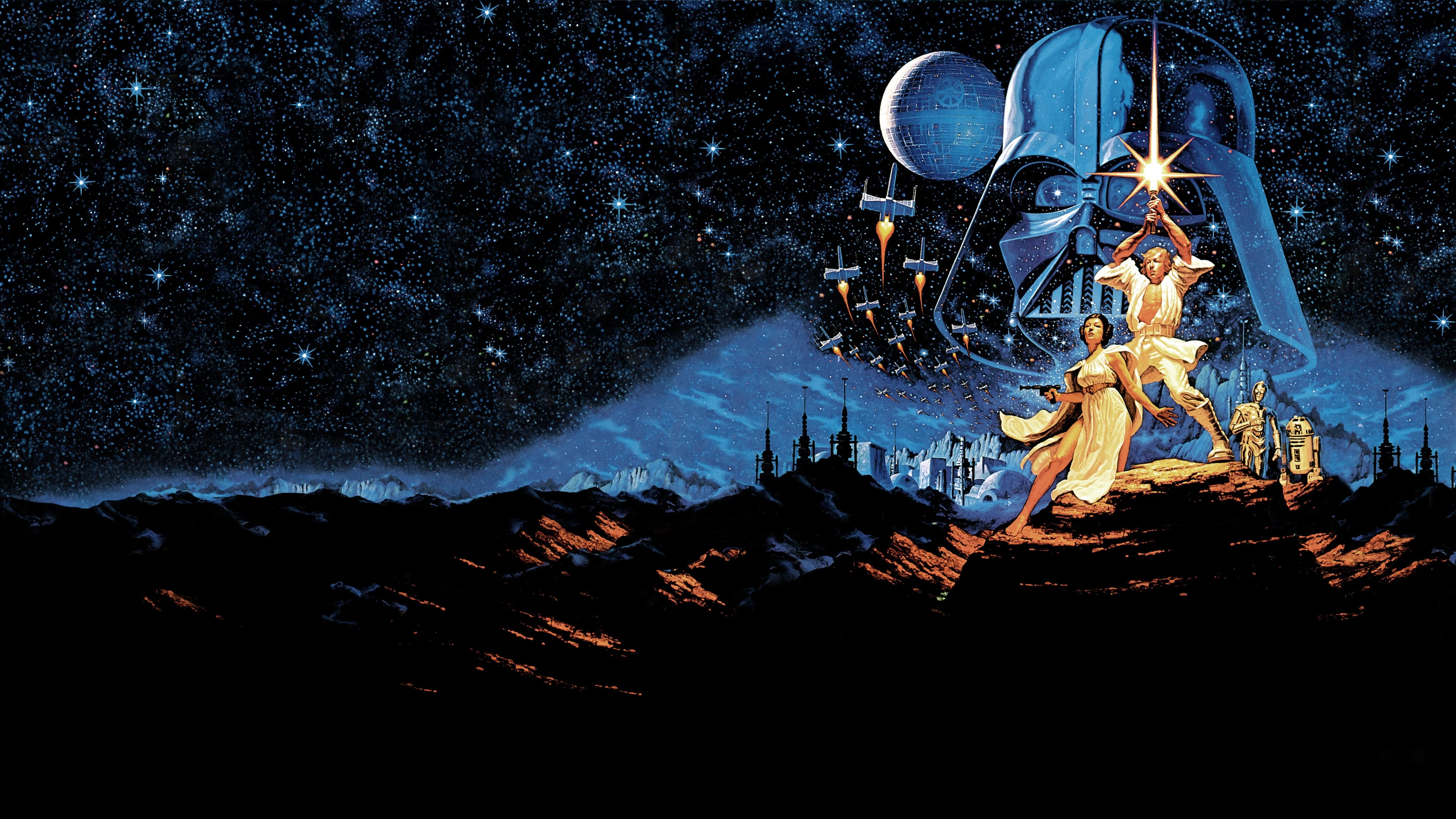
James Earl Jones: The Voice Behind Darth Vader
James Earl Jones was an American actor who voiced Darth Vader in Star Wars and Mufasa in The Lion King. He declined screen credit for the first two Star Wars films, later returned to the role and authorized a voice recreation for Obi-Wan Kenobi.
Who Was James Earl Jones?
James Earl Jones was an American actor known for his stage and screen work and for voicing Darth Vader and Mufasa. Born on January 17, 1931, in Arkabutla Township, Mississippi, he began his Broadway career in 1957. His first role at the Cort Theatre came the following year in Sunrise at Campobello. Those dates place his theater career well before he was cast as Darth Vader's voice in early 1977, a role that would connect his name to the Star Wars franchise.
Jones's work reached television audiences as well as theatergoers. He won two Emmy Awards in 1991 for Heat Wave and Gabriel’s Fire, while his film voice work included Mufasa in The Lion King (1994) and its 2019 remake. The Cort Theatre was later renamed the James Earl Jones Theatre, with its dedication scheduled for September 12, 2022, following a $47 million restoration and expansion. The theater link gives his early Broadway work a place in the story of his later recognition.
Jones died on September 9, 2024, at age 93. His association with Darth Vader began with the original Star Wars film in 1977, in which David Prowse performed the character in costume. The Star Wars page covers the franchise more broadly, while this account follows Jones's contribution, the credit he received and the later use of his recorded voice.
How Did James Earl Jones Become the Voice of Darth Vader?
James Earl Jones was cast as Darth Vader's voice in early 1977, while David Prowse performed the character in costume. Jones supplied the voice for Star Wars (1977), directed by George Lucas, and received $7,000 for the role. The distinction between the two performers matters when a reader encounters different answers to who played Darth Vader: Jones's contribution was the voice, while Prowse's was the costumed performance.
Jones declined screen credit for Star Wars and The Empire Strikes Back (1980), directed by Irvin Kershner, out of deference to Prowse. That decision left his voice work uncredited in both films, even though he had supplied the character's voice. He received credit for Return of the Jedi (1983), directed by Richard Marquand. The change in screen acknowledgment offers a useful way to trace his work across the original films without treating the earlier credits as a complete account of the performance.
Jones returned as Darth Vader's voice in Rogue One: A Star Wars Story (2016), directed by Gareth Edwards. Lucasfilm also records his participation in Revenge of the Sith (2005) and The Rise of Skywalker (2019). His connection to Obi-Wan Kenobi in 2022 took a different form: he authorized Lucasfilm to recreate the voice using archival recordings and artificial intelligence technology.
Why Was James Earl Jones Not Credited in Star Wars?
James Earl Jones declined screen credit for Star Wars and The Empire Strikes Back out of deference to David Prowse. Prowse performed Darth Vader in costume, while Jones supplied the voice. The films were released in 1977 and 1980, respectively, and Jones received credit for the role in Return of the Jedi in 1983. His absence from the first two sets of screen credits therefore does not mean that he was absent from the performances.
The credit decision also gives context to the $7,000 Jones received for Star Wars. He had been cast as Darth Vader's voice in early 1977, so the payment and the decision about screen acknowledgment concern the same contribution. Prowse's costumed work was a separate part of the character's appearance, and Jones's deference to him explains why Jones chose not to be named in the credits for those first two films.
For a reader checking the original films, the relevant distinction is between performing the voice and receiving screen credit for it. Jones did both by Return of the Jedi, whereas his voice work in Star Wars and The Empire Strikes Back went uncredited. That distinction also helps explain why accounts of Darth Vader can name both Jones and Prowse when describing the original film.
Which Star Wars Films Feature James Earl Jones?
James Earl Jones voiced Darth Vader in the original Star Wars films and returned as the character's voice in Rogue One: A Star Wars Story. His original film work began with Star Wars in 1977 and continued through The Empire Strikes Back and Return of the Jedi. He declined screen credit for the first two films out of deference to David Prowse, then received credit for Return of the Jedi in 1983.
Lucasfilm also records Jones's participation in Revenge of the Sith (2005) and The Rise of Skywalker (2019). Those credits sit alongside his return as Darth Vader's voice in Rogue One: A Star Wars Story in 2016. The dates give readers a way to follow his association with the franchise beyond the original films, while the description of each contribution matters when comparing appearances made years apart.
Obi-Wan Kenobi belongs in a separate category because it is a 2022 series with an authorized voice recreation. Jones allowed Lucasfilm to recreate Darth Vader's voice using archival recordings and artificial intelligence technology. When tracing his work, readers can distinguish his credited and uncredited film performances from that later production method, while recognizing that all are connected to his recorded voice.
What Did James Earl Jones Add to Star Wars Rebels?
James Earl Jones voiced Darth Vader in an added scene for ABC's October 26, 2014, broadcast of Star Wars Rebels: Spark of Rebellion. Lucasfilm announced the addition on October 9, identifying it as a scene made for that broadcast. Executive producer Dave Filoni explained that the team wanted something special for ABC and that the scene would provide insight into the Inquisitor, who was voiced by Jason Isaacs.
The broadcast detail matters because the added scene distinguishes the ABC edition from the earlier premieres discussed in Lucasfilm's announcement. Those Disney Channel and Disney XD premieres drew a reported 6.5 million viewers across the United States and international markets. That figure refers to the earlier premieres collectively, rather than measuring the later ABC audience or the audience for Jones's added scene.
For viewers comparing versions of Spark of Rebellion, the date and broadcaster identify where Jones's additional performance appeared. The scene also brings together two separately credited voice contributions: Jones as Darth Vader and Isaacs as the Inquisitor. Filoni's explanation supplies the reason given for the addition, while the premiere figure gives context for the earlier broadcasts without assigning their audience to the ABC showing.
Did James Earl Jones Voice Darth Vader in Obi-Wan Kenobi?
James Earl Jones authorized Lucasfilm to recreate Darth Vader's voice for Obi-Wan Kenobi using archival recordings and artificial intelligence technology. The 2022 series is consequently connected to Jones through his recorded voice and his permission to use it. That description identifies the documented production method and gives readers a precise answer when comparing the series with his earlier performances as Darth Vader.
Jones's role in the original Star Wars film was different in its method. He was cast as the character's voice in early 1977, while David Prowse performed Darth Vader in costume. Jones declined screen credit for that film and The Empire Strikes Back out of deference to Prowse, before receiving credit for Return of the Jedi. Those details concern his voice performance and its acknowledgment in the original films.
The comparison with Rogue One: A Star Wars Story is also useful when tracing Jones's later connection to the character. He returned as Darth Vader's voice for the 2016 film, while the account of Obi-Wan Kenobi describes an authorized recreation from archival recordings. For readers looking at his credits, the year, format and production method help keep those two appearances distinct.
How Did James Earl Jones Develop as a Speaker and Actor?
James Earl Jones developed as a speaker through poetry and performance after a childhood affected by a severe stutter. The Academy describes him communicating through writing during grammar school in rural western Michigan. A high school English teacher encouraged him to read a poem he had written before his classmates, and Jones discovered that memorized words could emerge without the stutter. The classroom reading connects his early speaking experience to a text he had prepared himself.
Jones later won a speaking contest during his senior year and received a full scholarship to the University of Michigan. The Academy records four years studying English while he pursued regional theater work. He also studied at the American Theatre Wing in New York and supported himself by polishing floors. These details place his development across education, theater training and paid work, before his casting as Darth Vader's voice in 1977.
His stage and film milestones followed that early training. Joseph Papp cast Jones in Henry V in 1960, and Jones made his film debut in Dr. Strangelove (1964), directed by Stanley Kubrick. His Broadway career had begun in 1957, with his first Cort Theatre role in Sunrise at Campobello in 1958. Together, those dates give readers a route through his work before Star Wars.
What Else Was James Earl Jones Known For?
James Earl Jones was known for Broadway performances, Emmy Award winning television work and the voice of Mufasa in The Lion King. He voiced Mufasa in the 1994 animated film and its 2019 remake, giving him another film voice role alongside Darth Vader. His television performances in Heat Wave and Gabriel’s Fire earned him two Emmy Awards in 1991, while his stage career began on Broadway in 1957.
Jones's Broadway work included Sunrise at Campobello, his first role at the Cort Theatre in 1958. Shubert counted 21 Broadway shows across his career, including 14 productions in its theaters. His Tony Awards included The Great White Hope in 1969 and Fences in 1987, followed by lifetime achievement recognition in 2017. Those stage credits provide a way to explore his career beyond the film roles associated with his voice.
The Cort Theatre was renamed the James Earl Jones Theatre, with its dedication scheduled for September 12, 2022, after a $47 million restoration and expansion. The building connects that later recognition to an early Broadway appearance in Sunrise at Campobello. For readers following his career across media, the theater dates, television awards and Mufasa films offer distinct starting points alongside his work as Darth Vader.
What Did the James Earl Jones Theatre Dedication Recognize?
The James Earl Jones Theatre dedication recognized Jones's Broadway career and followed a $47 million restoration and expansion of the former Cort Theatre. Shubert scheduled the dedication for September 12, 2022, at the theater on West 48th Street. Jones's first Cort role had been Sunrise at Campobello in 1958, so the building's name connected the tribute to a specific early performance in his Broadway career.
Shubert counted 21 Broadway shows for Jones, including 14 productions in its theaters. His Tony Awards included The Great White Hope in 1969 and Fences in 1987, with lifetime achievement recognition following in 2017. Shubert also linked its decision to name a theater for a prominent BIPOC theater figure to solidarity with Black Lives Matter in summer 2020. Its account places the naming initiative alongside Jones's recorded stage achievements.
The restoration and expansion included work by Francesca Russo Architect and an annex designed by Kostow Greenwood Architects. Improvements covered accessibility, dressing rooms and rehearsal space, as well as an expanded stage-left wing and upgraded rigging. Those details distinguish the building work from the dedication itself, while the 1958 role gives visitors a direct connection between the theater and Jones's early career.
Facts
- James Earl Jones was born on January 17, 1931, in Arkabutla Township, Mississippi. United States Congress, checked 2026-11-04
- Shubert dates Jones’s Broadway career to 1957 and his first Cort role, Sunrise at Campobello, to 1958. It scheduled the theater’s dedication for September 12, 2022, following a $47 million restoration and expansion. The Shubert Organization, checked 2026-11-04
- Jones was cast as Darth Vader’s voice in early 1977 and later participated in Revenge of the Sith (2005) and The Rise of Skywalker (2019). StarWars.com, checked 2026-11-04
- Jones received $7,000 for Star Wars (1977), declined credit for that film and The Empire Strikes Back (1980) out of deference to David Prowse, and received credit for Return of the Jedi (1983). Variety, checked 2026-11-04
- Jones won two Emmy Awards in 1991 for Heat Wave and Gabriel’s Fire and returned as Darth Vader’s voice in Rogue One: A Star Wars Story (2016). D23, checked 2026-11-04
- Jones voiced Mufasa in The Lion King (1994) and its 2019 remake. Variety, checked 2026-11-04
- For Obi-Wan Kenobi (2022), Jones authorized Lucasfilm to recreate Darth Vader’s voice using archival recordings and artificial intelligence technology. Variety, checked 2026-11-04
- Jones died on September 9, 2024, at age 93. StarWars.com, checked 2026-11-04
- On October 9, 2014, Lucasfilm announced an added Vader scene voiced by Jones for ABC’s October 26 broadcast of Spark of Rebellion. Dave Filoni explained the addition; Jason Isaacs voiced the Inquisitor. The reported 6.5 million viewers belonged to earlier Disney Channel and Disney XD premieres across the United States and international markets. StarWars.com, checked 2026-11-04
- The Academy documents Jones’s childhood stutter, classroom poetry reading, speaking contest win, full Michigan scholarship, four years studying English, floor polishing work, American Theatre Wing training, Joseph Papp’s 1960 Henry V casting, and film debut in Stanley Kubrick’s Dr. Strangelove (1964). Academy of Motion Picture Arts and Sciences, checked 2026-11-04
- Shubert counted 21 Broadway shows, including 14 at its theaters. Jones won Tonys for The Great White Hope (1969) and Fences (1987), plus lifetime achievement recognition in 2017. The Shubert Organization, checked 2026-11-04
- Shubert linked its renaming initiative to summer 2020 solidarity with Black Lives Matter. Renovations involved Francesca Russo Architect; Kostow Greenwood Architects designed the annex. Improvements included accessibility, dressing rooms, rehearsal space, an expanded stage-left wing and upgraded rigging. The Shubert Organization, checked 2026-11-04
FAQs
Who did James Earl Jones voice in Star Wars?
James Earl Jones voiced Darth Vader, beginning with Star Wars in 1977. He was cast for the voice role in early 1977.
Was James Earl Jones in the Darth Vader suit?
David Prowse performed Darth Vader in costume in the original Star Wars film, while James Earl Jones supplied the character's voice.
Why was James Earl Jones not credited in Star Wars?
James Earl Jones declined screen credit for Star Wars and The Empire Strikes Back out of deference to David Prowse. He received credit for Return of the Jedi in 1983.
Did James Earl Jones voice Darth Vader in Obi-Wan Kenobi?
James Earl Jones authorized Lucasfilm to recreate Darth Vader's voice for Obi-Wan Kenobi using archival recordings and artificial intelligence technology.
Did James Earl Jones voice Mufasa?
James Earl Jones voiced Mufasa in the 1994 animated film The Lion King and its 2019 remake.
How old was James Earl Jones when he died?
James Earl Jones was 93 when he died on September 9, 2024. He was born on January 17, 1931.
More Star Wars Articles
All Star Wars articles- Star Wars the Adventure Continues: A Guide to Star ToursNovember 4, 2026
Star Wars the Adventure Continues most likely refers to Star Tours: The Adventures Continue, a flight simulator with digital 3D video and more than 250 possible storyline variations.
- Darth Maul: Survival, Appearances and Final FateNovember 4, 2026
Darth Maul is Darth Sidious's former Sith apprentice, who survives being cut in half by Obi-Wan Kenobi and later becomes a criminal leader.