Planet of the Apes Reviews: Our Verdict on Every Film
Planet of the Apes reviews on Cinvibe cover all ten films, from Planet of the Apes (1968) to Kingdom of the Planet of the Apes (2024), and in my opinion the best of them are Planet of the Apes (1968) and Dawn of the Planet of the Apes, each rated 9 out of 10. The ratings are my own opinion, not a tally of anyone else's scores. The weakest entries are Battle for the Planet of the Apes and Tim Burton's Planet of the Apes (2001), both rated 4.
Key Takeaways
- Planet of the Apes (1968) and Dawn of the Planet of the Apes share the top rating of 9 out of 10 in my verdicts.
- The modern run from Rise of the Planet of the Apes to Kingdom of the Planet of the Apes is the most consistent stretch of the saga.
- Escape from the Planet of the Apes is the best of the four 1970s sequels, in my opinion.
- Planet of the Apes (2001) made money but is a standalone remake that I rate near the bottom.
- Kingdom of the Planet of the Apes is a good film and a sound place to start for new viewers who want a recent one.
Hot Takes
- Escape from the Planet of the Apes is the best of the 1970s sequels, and it beats Beneath the Planet of the Apes by a clear distance. (Priya Nair, opinion)
- Planet of the Apes (2001) is a misfire, but it is a more watchable one than Battle for the Planet of the Apes. (Priya Nair, opinion)
- Dawn of the Planet of the Apes is the film I would hand to a skeptic first, even though it sits in the middle of a trilogy. (Priya Nair, opinion)
Opinion, by Priya Nair.
Planet of the Apes Reviews: Verdicts From 1968 to 2024
Our Planet of the Apes reviews give a short verdict on each of the ten films, in three runs: the five original films from 1968 to 1973, Tim Burton's Planet of the Apes (2001), and the four modern films from 2011 to 2024. Ratings are out of ten and they are opinion, so treat them as a guide to where to spend an evening rather than a measurement. Each film links to its own page for cast, plot and facts, and if you would rather see them stacked against each other, there is a separate list of planet of the apes movies ranked.
The Original Five (1968 to 1973)
Planet of the Apes (1968), directed by Franklin J. Schaffner, is the film that justifies the whole saga, and I rate it 9. Charlton Heston plays the astronaut George Taylor, Roddy McDowall and Kim Hunter play the chimpanzees Cornelius and Zira, and Jerry Goldsmith's score keeps the planet feeling alien. It cost $5.8 million and took about $32.6 million in the US, according to Box Office Mojo, which was a handsome return for 1968. The premise never feels like a gimmick, and that is rarer than it sounds.
Beneath the Planet of the Apes (1970), directed by Ted Post, earns a 5. It was made on $3 million, and Taylor vanishes early, which leaves James Franciscus as Brent to carry the search for him through the Forbidden Zone. It has ideas, but it plays like a smaller story stretched over a large world. If you are watching in order, do not skip it, though perhaps lower your expectations.
Escape from the Planet of the Apes (1971), directed by Don Taylor, is my favorite of the sequels and gets a 7. Three chimpanzees land in 1973 Los Angeles, and the film turns the series on its head: the apes are now the strangers in a human city. Its early scenes are light and nearly comic, with Roddy McDowall and Kim Hunter charming as Cornelius and Zira, and then it darkens with Eric Braeden's Dr. Otto Hasslein pressing the government commission. It cost $2.5 million and grossed about $12.3 million.
Conquest of the Planet of the Apes (1972) and Battle for the Planet of the Apes (1973) were both directed by J. Lee Thompson. Conquest is the bleakest film in the saga, with McDowall as Caesar and Ricardo Montalban as the circus owner Armando in a 1991 where apes are slave labor, and at 88 minutes it moves fast. I give it a 6. Battle, with Claude Akins as the gorilla Aldo, has the lowest gross of the series at roughly $8.8 million, and I rate it 4: the ideas about shared living are sound, but a budget of $1.8 million cannot support them.
The 2001 Remake
Planet of the Apes (2001), directed by Tim Burton, is a standalone remake and not part of the main saga's story, and I rate it 4. Mark Wahlberg plays Captain Leo Davidson, Tim Roth is a physically fierce General Thade, Helena Bonham Carter is the sympathetic Ari, and Michael Clarke Duncan and Paul Giamatti give the ape cast real character. Danny Elfman wrote the score. Roth's commitment is the best thing in it, but the human lead is thin and the final moments are more puzzling than satisfying. It counts as a spin-off, so you never need to see it to follow anything else.
The Modern Films (2011 to 2024)
Rise of the Planet of the Apes (2011), directed by Rupert Wyatt, is an 8. James Franco plays the scientist Will Rodman, and Andy Serkis, working with Weta, makes Caesar a character rather than an effect. Its budget was $93 million and it earned about $482 million worldwide, according to Box Office Mojo. The human story is the weaker half, in my opinion, but every scene with Caesar learning who he is works.
Dawn of the Planet of the Apes (2014), directed by Matt Reeves, gets a 9 and is the most successful film in the series, with about $711 million worldwide on a $170 million budget. Toby Kebbell's Koba gives the film its tension, Jason Clarke and Gary Oldman represent the two ways humans might respond, and the dam sequence is a model of building a conflict from both sides. Michael Giacchino's score is restrained, and it helps.
War for the Planet of the Apes (2017), also directed by Reeves, earns an 8. At 140 minutes it is slower and more somber, with Woody Harrelson as the Colonel and Steve Zahn adding some needed lightness as Bad Ape. It grossed about $491 million on a $150 million budget. I admire it more than I enjoy it, which is a fair complaint to make of a film this serious.
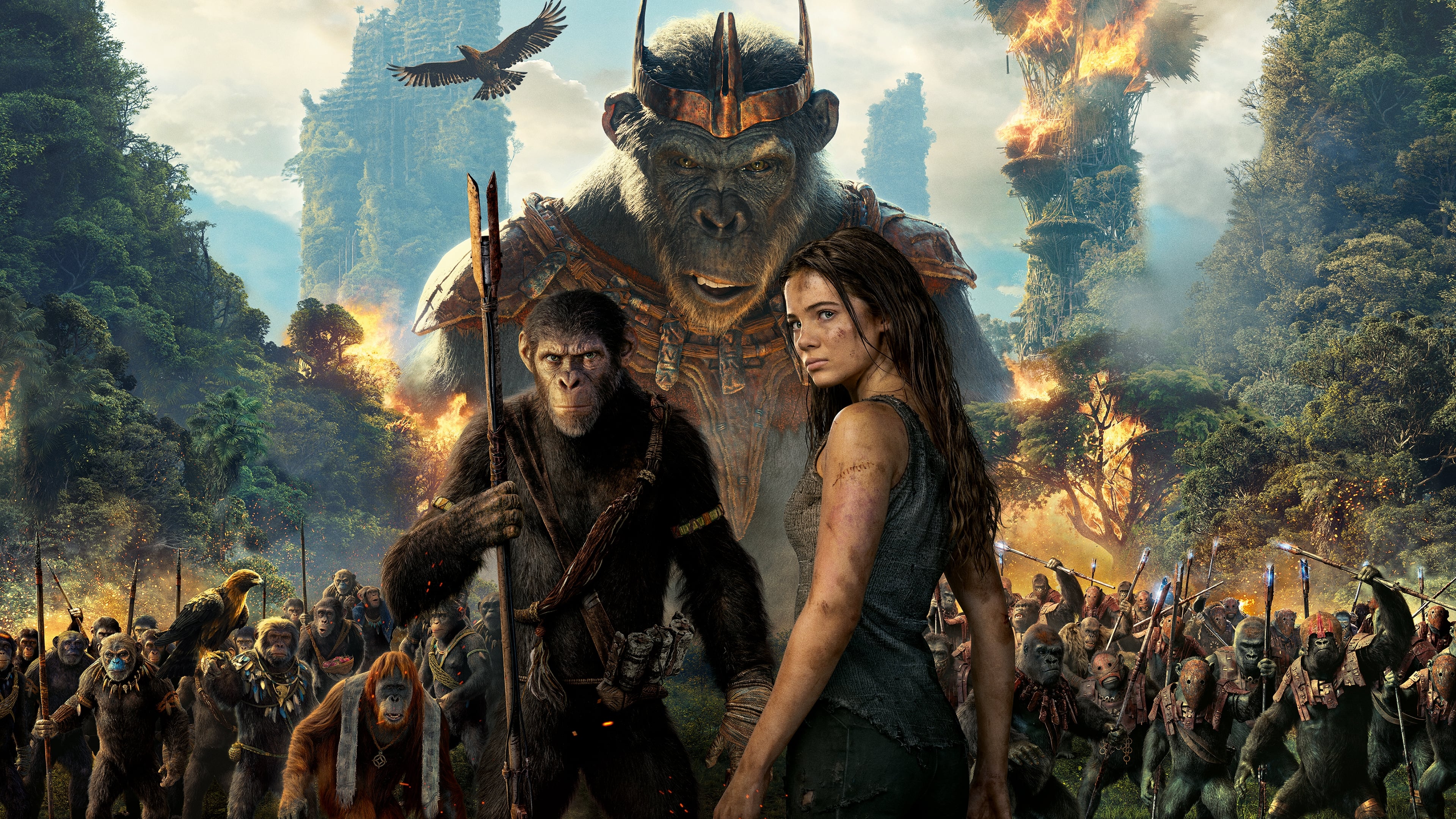
Kingdom of the Planet of the Apes (2024), directed by Wes Ball, is a 7. Set many generations after Caesar, it follows the young chimpanzee Noa (Owen Teague) alongside Freya Allan, Kevin Durand as Proximus Caesar and William H. Macy. At 145 minutes it takes its time, and it earned about $397 million on a $160 million budget. It is a good film with a strong first hour, and a fair choice for anyone who wants to begin with the newest entry.
What Comes Next
No Kingdom of the Planet of the Apes sequel has been announced, and the next Apes film is a different project. TheWrap reported in May 2026 that Matt Shakman is directing an untitled film for 20th Century Studios from a script by Josh Friedman, and that it is a new original story rather than a follow up to Kingdom. No release date has been given, so see kingdom of the planet of the apes sequel for the latest status.
If you are new to the saga, start with Planet of the Apes (1968) and then follow the planet of the apes movies in order, or begin with Rise of the Planet of the Apes if you want only the modern run. The planet of the apes box office page has the grosses, and where to watch planet of the apes lists the services.
FAQs
Which Planet of the Apes series is the best?
In my opinion the modern run, from Rise of the Planet of the Apes to War for the Planet of the Apes, is the most consistent. The original five films contain the single best film in Planet of the Apes (1968), but the four 1970s sequels vary a great deal in quality. Planet of the Apes (1968) and Dawn of the Planet of the Apes share my top rating of 9 out of 10.
Why did 2001 Planet of the Apes fail?
Financially it did not fail: Tim Burton's Planet of the Apes (2001) cost $100 million and earned about $362 million worldwide, according to Box Office Mojo. Creatively I think it fell short, because it is a standalone remake with a thin human lead and a puzzling final stretch. That is my opinion, and the film still has strong ape performances from Tim Roth and Helena Bonham Carter.
Is Planet of the Apes appropriate for 10 year olds?
It depends on the film, and the older ones are the safer bet. Planet of the Apes (1968) is rated G in the US and PG in the UK, while the modern films from Rise of the Planet of the Apes onward are PG-13 in the US and 12A in the UK. Conquest of the Planet of the Apes is rated PG in the US and 15 in the UK, and I would say the war films carry violence that suits older children better.
What was the most successful Planet of the Apes movie?
Dawn of the Planet of the Apes (2014) is the highest grossing, with about $711 million worldwide on a $170 million budget, according to Box Office Mojo. War for the Planet of the Apes (2017) is next at roughly $491 million, then Rise of the Planet of the Apes (2011) at roughly $482 million. The lowest is Battle for the Planet of the Apes at about $8.8 million.
Is Planet of the Apes worth watching?
Yes, I think so, and Planet of the Apes (1968) is the place to start because it holds up as a drama about power and belief as well as a science fiction story. If you prefer modern effects and a more continuous story, the run from Rise of the Planet of the Apes to War for the Planet of the Apes works as a complete arc.
Is the newest Planet of the Apes movie good?
Yes: Kingdom of the Planet of the Apes (2024), directed by Wes Ball, is good, and I rate it 7 out of 10. It has a strong first hour and a convincing young lead in Owen Teague as Noa, though it does not reach the level of Dawn of the Planet of the Apes. It earned about $397 million worldwide, according to Box Office Mojo.