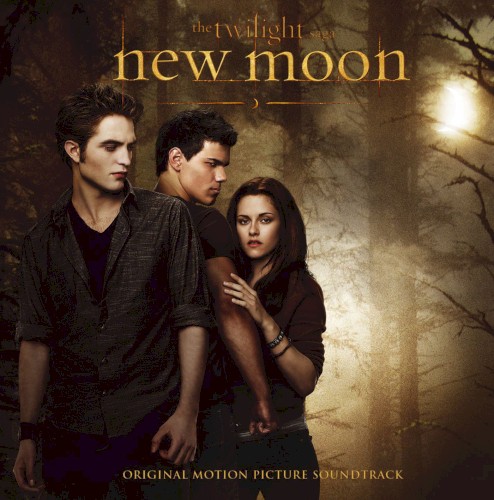
The ending of Twilight New Moon settles Bella's future without settling her heart: she keeps Edward, and the film hands both a deadline and a proposal to the next sequel. After the Cullens come back to Forks, Jacob is angry and heartbroken that Bella chose Edward, and the Cullens and the wolf pack remain on uneasy terms.
The Volturi agreed to let Bella live only if she is turned into a vampire. That is why Edward's offer matters so much. He says he will change her if she marries him, and the film leaves Bella's answer, and the clash between vampires and werewolves, hanging for the following film.
Why does the Italy sequence carry so much weight? In my opinion, it is the one stretch where the film stops being about absence and becomes about consequence. Alice sees Bella's cliff jump in a vision and wrongly tells Edward she is dead, so Edward travels to Volterra to ask the Volturi to kill him. Bella reaches him just before he steps into the sun in public. The rescue is only possible because of a misread vision, and Aro's ruling follows directly from it: because Bella now knows the secret, she must be changed or killed. The scene that looks like a reunion is also the moment the film sets its clock.
The setting helps. The production used Montepulciano in Tuscany for Volterra, and according to the Visit Tuscany tourism site it built a fountain in Piazza Grande for those scenes. Placing the Volturi in a real Italian hill town, rather than a gothic set, makes their power feel old and settled, which suits Michael Sheen's Aro, who decides Bella's fate with unnerving calm. It could be argued that this is the biggest change from the first film, where the danger was a hunting vampire in a small American town. Here the threat is a ruling body with rules.
The ending also shows how the saga was reshaping itself under a new director. Chris Weitz replaced Catherine Hardwicke, who directed Twilight (2008) and did not return, and Screen Daily reported his hiring on December 15, 2008. The result is a bigger film in every measurable way. New Moon runs 131 minutes against 122 for Twilight (2008), and it grossed about $710 million worldwide against about $405 million for the first film, according to Box Office Mojo. Perhaps that scale explains why the ending leans on setup rather than closure. It is a film written to pass the story along: Victoria is still out there, and she is recast with Bryce Dallas Howard in The Twilight Saga: Eclipse.
That being said, the proposal remains the most debatable beat. It ties a life or death threat to a marriage, which could feel uncomfortable for younger viewers, and I would say the more satisfying reading is that Bella is the one who asks to be turned, so the choice stays hers. Compare that with the first film, where Edward acts to keep her safe: here, for the first time, Bella sets the terms of her own future.
As for the title, a new moon is the phase when the moon cannot be seen from Earth. The film appears to use it for the dark months when Edward is gone, though that is a reading rather than a stated explanation. The story continues in The Twilight Saga: Eclipse.